
Authentic leadership is values-based leader signaling: the consistent, visible display of self-awareness, transparency, balanced judgment, and a clear moral compass. When we lead this way, people notice, and that noticing is what builds trust and pulls them into real engagement. The rest of this guide breaks down the theory, the evidence, and the exact habits that get you there, as explained by how a marketing agency builds brands that scale.
TL;DR:
- The model tracks four observable dimensions: self-awareness, relational transparency, balanced processing, and an internalized moral perspective; healthcare analyses also add caring and shared decision making.
- A 2026 analysis of 19 studies conducted after the pandemic, covering nearly 7,000 participants, found an engagement correlation of r = 0.41, not a guaranteed outcome.
- Listen for about 70% of each conversation, and pair Authentic Leadership Questionnaire self assessments with anonymous peer feedback every 6 to 8 weeks.
- Directness becomes abrasive when leaders mistake bluntness for integrity; invite dissent before stating your view and deliver difficult feedback privately.
Table of Contents
- What authentic leadership actually means today
- The four dimensions, and what they look like in a real meeting
- Why authentic leadership matters: what the research shows
- A practical routine for building authentic leadership
- When authenticity turns abrasive, and how to course-correct
- How Middy Matthews trains these four dimensions in the room
- Authenticity is a discipline, not a personality trait
- Build it with us: workshops that train the four dimensions
- FAQ
- Sources
What authentic leadership actually means today
For years, authentic leadership got stuck chasing something fuzzy: your “true self.” Recent scholarship moved past that. A 2024 editorial reviewing two decades of research reframes it as concordant, values-based leader signaling. Translation: it is not about feeling authentic inside. It is about sending observable signals that line up with what you say you believe.
Four dimensions anchor the model: self-awareness, relational transparency, balanced processing, and an internalized moral perspective. Some fields push the definition further. Concept analyses in healthcare literature add caring and shared decision making as attributes worth tracking, especially in team settings where collaboration carries the weight.
Researchers often measure these traits with the Authentic Leadership Questionnaire, a tool widely cited across the literature on authentic leadership for both self-assessment and rater scoring. The caveat worth holding onto: signals can be practiced and improved. That is good news if you are starting from scratch.
The four dimensions, and what they look like in a real meeting
Theory is only useful once you can spot it happening. Here is what each dimension looks like when a leader is actually doing it, not just claiming it.
- Self-awareness sounds like telling a specific story about a mistake you made and what it taught you, then asking a direct report what they are noticing that you might be missing.
- Relational transparency sounds like walking people through your reasoning before you announce a decision, including the part where you were not sure.
- Balanced processing sounds like asking the person who disagrees with you to go first, and actually changing your position when their evidence is stronger.
- Internalized moral perspective sounds like naming the value behind a hard call, out loud, in front of the team that has to live with it.
- Caring and shared decision making sound like splitting a decision with the people it affects instead of just informing them after the fact.
None of these require a personality transplant. They require repetition until they become how you default under pressure.
Pro Tip: Pick one dimension a week to practice in meetings rather than trying to overhaul your style all at once.
Why authentic leadership matters: what the research shows
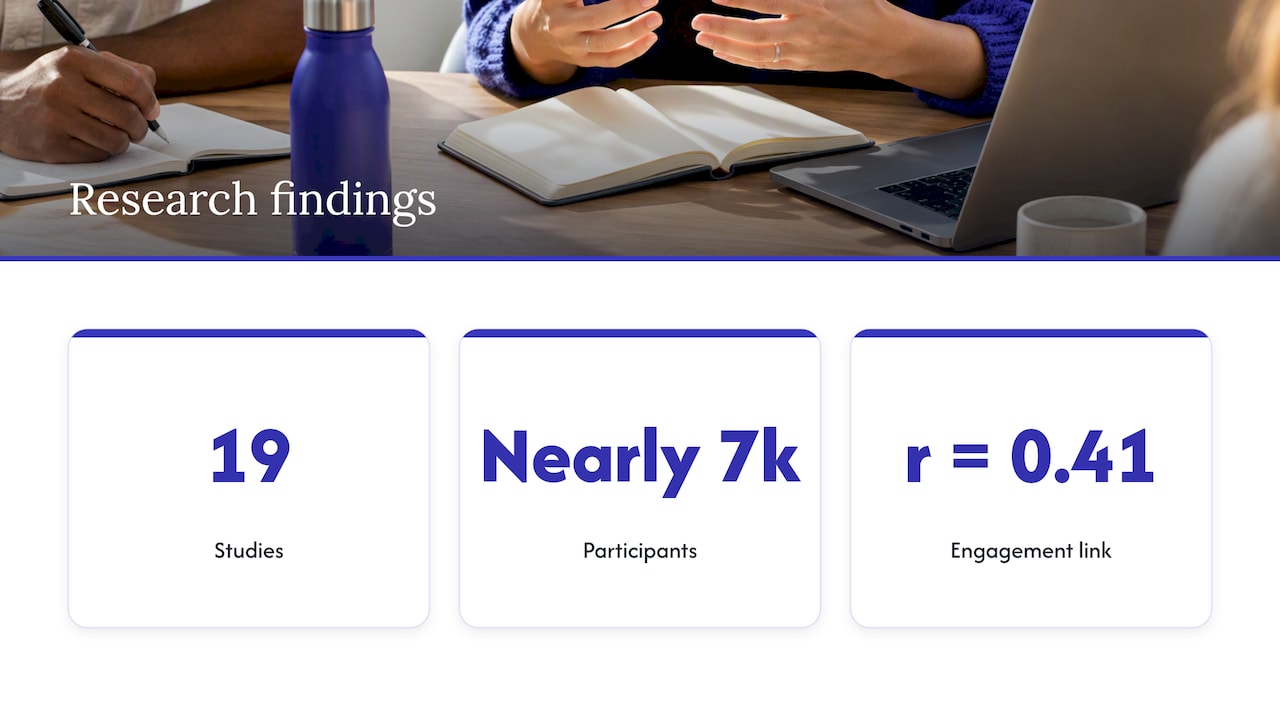
This is not just a feel-good leadership trend. A 2026 meta-analysis covering 19 post-pandemic studies and nearly 7,000 participants found a pooled correlation of r = 0.41 between authentic leadership and work engagement, a medium and reliable effect.
A medium, dependable link: authentic leadership correlates with engagement at r = 0.41, meaning leaders who consistently show up this way can expect a meaningful lift in how engaged their teams are, though not a guaranteed one in every context.
Harvard Business School’s synthesis of the broader research base ties the same leadership style to stronger relationships, higher trust, better productivity, and improved well-being among employees. Effects vary by industry, team size, and how long a leader has been practicing these behaviors, so treat the number as a solid planning assumption, not a promise.
A practical routine for building authentic leadership
You build this the way you build any skill: small reps, repeated often, with feedback built in. Here is a sequence that works across a quarter.
- Morning reflection, 3 minutes: write one value you want to act on today and one place you might be tempted to cut a corner on it.
- Weekly values checklist: review five recent decisions and mark which ones you can clearly trace back to a stated value.
- Humble inquiry in conversations: ask one more question than feels natural before you offer an opinion.
- 30/70 talk ratio: in discovery or one-on-one conversations, aim to listen roughly 70% of the time, which gives dissent room to surface.
- Meeting script for balanced processing: rotate a “devil’s advocate” role, require a one-line written pro and con before any big call, and close by stating the value behind the final decision.
- Short self-check every 6 to 8 weeks: run a brief ALQ-style self-assessment alongside anonymous peer feedback to catch blind spots early.
One-to-one meetings are where these habits compound fastest. Our guide to running coaching-style one-on-ones walks through scripts that build relational transparency in twenty to thirty minutes. If you want a fuller agenda for embedding these habits across a team, our 90-day workshop framework ties each practice to a retention-focused outcome.
Pro Tip: Track one metric, like meeting dissent frequency or peer feedback scores, so progress stays visible instead of anecdotal.
When authenticity turns abrasive, and how to course-correct
Being direct is not the same as being authentic, and the gap between them trips up a lot of leaders. MIT Sloan Management Review calls this the “authentic jerk” problem: leaders who mistake blunt honesty for integrity and wonder why their influence shrinks.
The fix is not less honesty. It is more humility attached to it.
- Lead with curiosity before you lead with your opinion, so feedback lands as inquiry instead of verdict.
- Watch your timing: a hard truth delivered in private rarely does the damage the same truth does in front of a room.
- Actively solicit views that differ from yours before you speak, not after.
- When a pattern of friction shows up repeatedly, structured coaching or peer feedback catches blind spots that self-reflection alone misses.
How Middy Matthews trains these four dimensions in the room
Our workshops address a common frustration with leadership training focusing on abstract traits without practical exercises. Our sessions map directly to the four dimensions, pairing self-awareness exercises with live balanced-processing drills, so attendees leave with reps, not just notes.
Modules use real scenarios from sales teams, real estate brokerages, and corporate floors, environments where authenticity is often challenged. Our values-based leadership framework gives teams a 30 to 90 day path for turning stated values into daily decisions, and our team culture workshop activities build the caring and shared decision making attributes that keep authenticity from curdling into bluntness.
Authenticity is a discipline, not a personality trait
People treat authentic leadership like a fixed quality you either have or fake. Thirty years between competitive sports and real estate taught me otherwise: the leaders who last are the ones who train the habit, not the ones born comfortable with themselves. Self-awareness is a rep you do daily. Empathy under pressure is a rep you do daily. Measurable change follows the reps, not the intention behind them.
— Middy
Build it with us: workshops that train the four dimensions
If you want these habits installed in your team rather than just explained, our half-day leadership training walks managers through balanced processing, values-based decisions, and humble inquiry using live scenarios. Real estate brokerages and corporate teams tend to see the fastest traction because the practices map directly onto the conversations they’re already having.

| Offering | Best for | Next step |
|---|---|---|
| Coached, Not Bossed. (half-day training) | Managers building the four dimensions | Book the training |
| Trained, Not Sold. (interactive workshop) | Sales teams blending authenticity with discovery conversations | Explore the workshop |
| Habits, Not Hacks | Corporate teams sustaining the practice long term | See the offering |
Reach out through Middy to check dates and find the format that fits your team.
FAQ
Which characteristics can be used to describe an authentic leader?
Authentic leaders show self-awareness, relational transparency, balanced processing, and an internalized moral perspective, often paired with caring and shared decision making. These show up as observable behaviors, like acknowledging limits or soliciting dissent, rather than a fixed personality type.
What are the 5 C’s of leadership?
Definitions of the “5 C’s” vary across leadership literature, and no single version applies specifically to authentic leadership. A commonly cited set includes character, competence, commitment, courage, and communication, though sources differ on the exact list.
What are the 7 most important leadership traits?
Lists of seven traits vary by source and rarely map directly onto the authentic leadership model. The four core dimensions, self-awareness, relational transparency, balanced processing, and internalized moral perspective, offer a more research-grounded starting point than any generic trait list.
What are the four main types of leadership styles?
Common frameworks distinguish authentic, transformational, transactional, and servant leadership styles, each emphasizing different drivers of influence. Authentic leadership centers on values-based signaling, while transformational leadership emphasizes inspiring vision and change.
Does authentic leadership actually improve team performance?
A 2026 meta-analysis found a medium correlation (r = 0.41) between authentic leadership and work engagement across nearly 7,000 participants. Related research also links it to higher trust and productivity, though effects vary by team and context.
Sources
- Does Authentic Leadership Foster Work Engagement? A post-pandemic meta-analysis
- Authentic leadership: 20-Year review editorial
- Are you an authentic leader or an authentic jerk?
- Authentic Leadership: What It Is & Why It’s Important
Leave a Reply