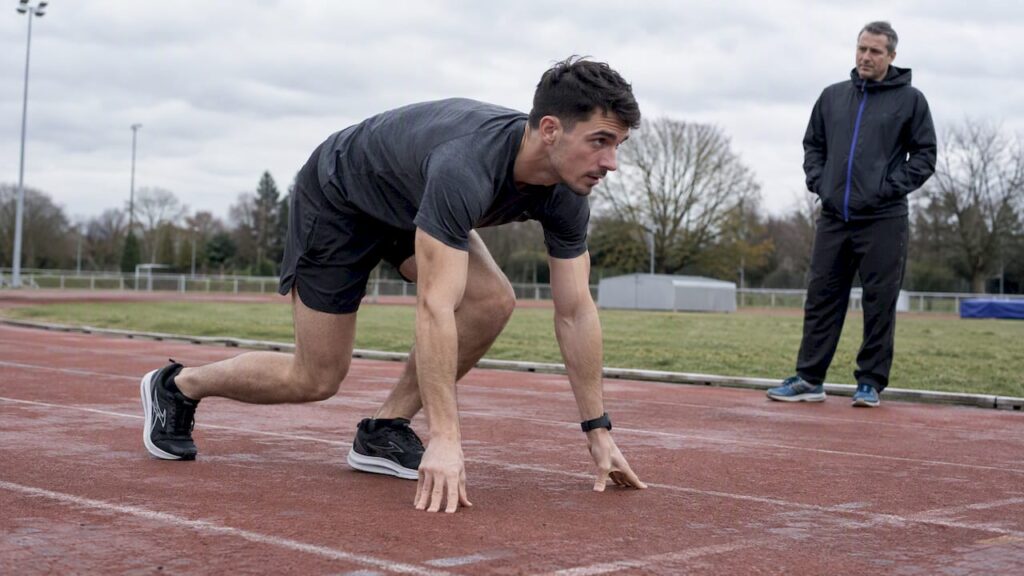
High performance habits are not a morning routine you copy from a billionaire. They are a small set of repeatable behaviors: getting clear on what matters, protecting your energy, raising the stakes on yourself, doing the work that counts, bringing people with you, and acting when it’s uncomfortable. Add one honest fact about timing (habits take about two months, not three weeks) and you have a plan you can start this week.
I spent decades in competitive sports and real estate. Both worlds are full of people chasing hacks. The ones who last do something less exciting: they train the basics until the basics run on their own.
TL;DR
- The best-known framework lists six habits: seek clarity, generate energy, raise necessity, increase productivity, develop influence, and demonstrate courage.
- The 21-day rule is a myth. A 2024 review found a median of 59 to 66 days to form a habit, with a range of 4 to 335 days.
- Sleep and recovery are performance habits, not rewards. Detaching from work after hours helps you perform the next day.
- Pick one habit, tie it to a specific cue, and practice it. Don’t stack ten new routines on Monday.
- High performance is as much about managing your internal state as your output.
Table of Contents
- What “high performance” means, and what it doesn’t
- The six habits, in plain words
- Why the 21-day rule fails you
- The habits people skip: sleep and recovery
- What elite athletes teach the rest of us
- A two-month plan you can actually follow
- Our view: Training, Not Hacks
- Bring this to your team
- FAQ
- Sources
What “high performance” means, and what it doesn’t
Most people searching this topic land on Brendon Burchard’s book, and for good reason. It defines high performance as succeeding beyond standard norms, consistently over the long term. Notice the last part: consistently, over the long term. Not one big quarter. Not one great season.
That’s the filter I use for every habit in this article. If it only works when you feel great, it isn’t a high performance habit. It’s a good day.
It also doesn’t mean grinding. Research from McKinsey on what winning athletes, teams and coaches do differently describes seeking an edge ruthlessly as a defining behavior, and it’s not mindless hustle. It’s small, incremental improvements built on systems. Winning teams don’t just work harder. They get better at the details, and they keep doing it.
The six habits, in plain words
The six habits from Burchard’s framework are seek clarity, generate energy, raise necessity, increase productivity, develop influence, and demonstrate courage. Here is how I’d translate each one for a real estate agent, a manager, or a young athlete.
Seek clarity
Know who you want to be, how you want to show up, and what matters this season. Most people I coach can tell me their number for the year. Far fewer can tell me what a great Tuesday looks like.
Try this: before you open email, write down the one outcome that would make today a win. One. Then check it at the end of the day.
Generate energy
Energy is a resource you manage, not a mood you wait for. Sleep, movement, food and recovery all sit here. I’ll come back to the research, because this is where people cut corners first.
Raise necessity
This is the “why now” habit. Athletes get it for free: there’s a game on the calendar. Professionals have to build it. Who are you doing this for? What standard do you refuse to drop below? Attach the work to a person, a team or an identity, and the work gets easier to start.
Increase productivity
Productivity here means doing more of what actually moves the needle, not doing more. In sales, that’s the difference between chasing a pile of leads and building relationships with people who understand their choices. I wrote about that in how to train sales teams to listen instead of pitch.
Develop influence
People who perform at a high level bring others up with them. For a manager, that means coaching rather than bossing. For a team captain, it means setting the standard in practice, not just in the speech. If you lead people, the 20-minute coaching conversation framework is a good place to start.
Demonstrate courage
Say the thing in the meeting. Make the call you’ve been avoiding. Ask for the sponsor, not just the mentor. Courage is a habit because it gets easier the more you practice it in small doses. If speaking up is your weak spot, the two-week speak up practice plan breaks it into reps.
Why the 21-day rule fails you
You’ve heard it: do something for 21 days and it becomes a habit. It’s wrong, and believing it makes people quit right before the habit sticks.
A 2024 systematic review and meta-analysis of health-related habits across 20 studies and 2,601 participants found a median of 59 to 66 days to form a habit. Individual timelines ranged from 4 to 335 days, depending on the behavior, the context and the person. The same review reports that morning practices and self-selected behaviors generally showed greater habit strength.
What does that mean for you?
- Plan for about two months, not three weeks.
- Expect a wide range. If your habit isn’t automatic at day 30, you aren’t failing.
- Choose behaviors you actually picked yourself. You’ll stick with them longer.
- If you can, anchor the habit to the morning, when your day hasn’t yet had a chance to interfere.
Cues beat willpower
A habit needs a trigger. A randomized controlled trial on routine-based versus time-based cue planning looked at how people form a plan that links a cue to a behavior. The takeaway I use with clients: decide when and where before you decide how hard. “After I pour my coffee, I write my one outcome for the day” beats “I’ll be more focused.”
I also like 10 to 15 minute micro workouts as an example of the principle. When the habit is small enough to fit into a busy day, you can repeat it, and repetition is what builds the automatic part.
The habits people skip: sleep and recovery
Everyone wants the productivity tips. Almost nobody wants to hear that going to bed is a performance strategy.
A meta-analysis in the Journal of Applied Psychology covered 152 primary studies on sleep and work and tied sleep to employee performance, safety, health and attitudes. Research on 1,364 youths also found that sleep was positively associated with cognition four years later, while recreational screen time was linked with worse cognitive and academic outcomes. The same work suggests that more physical activity and sleep can blunt the cost of screen time. If you coach young athletes or have a kid in a school team, that’s worth sharing at the next parent meeting.
For managers, here’s one habit that costs nothing: anchor your wake time. I laid out how in this piece on sleep and productivity.
Switch off on purpose
Recovery also happens after work. Research on leader recovery and leader identity in the Journal of Occupational Health Psychology looks at how leaders who mentally detach from work in the evening are better able to step into their role the next day. In the related study, affect-focused rumination after hours used up cognitive resources and got in the way of leader identity and transformational behavior. Employees with high recovery experiences, like detachment and relaxation, also showed less negative spillover from stressors such as workplace incivility, which otherwise predicts more insomnia symptoms.
Plain version: if you replay the bad meeting at 10 p.m., you pay for it at 9 a.m. Pick a shutdown cue. Close the laptop, write tomorrow’s top outcome on a sticky note, and walk around the block.
What elite athletes teach the rest of us
Athletes live the high performance question every day: how do you perform when it counts? A few lessons from the Paris 2024 Olympians hold up well for professionals.
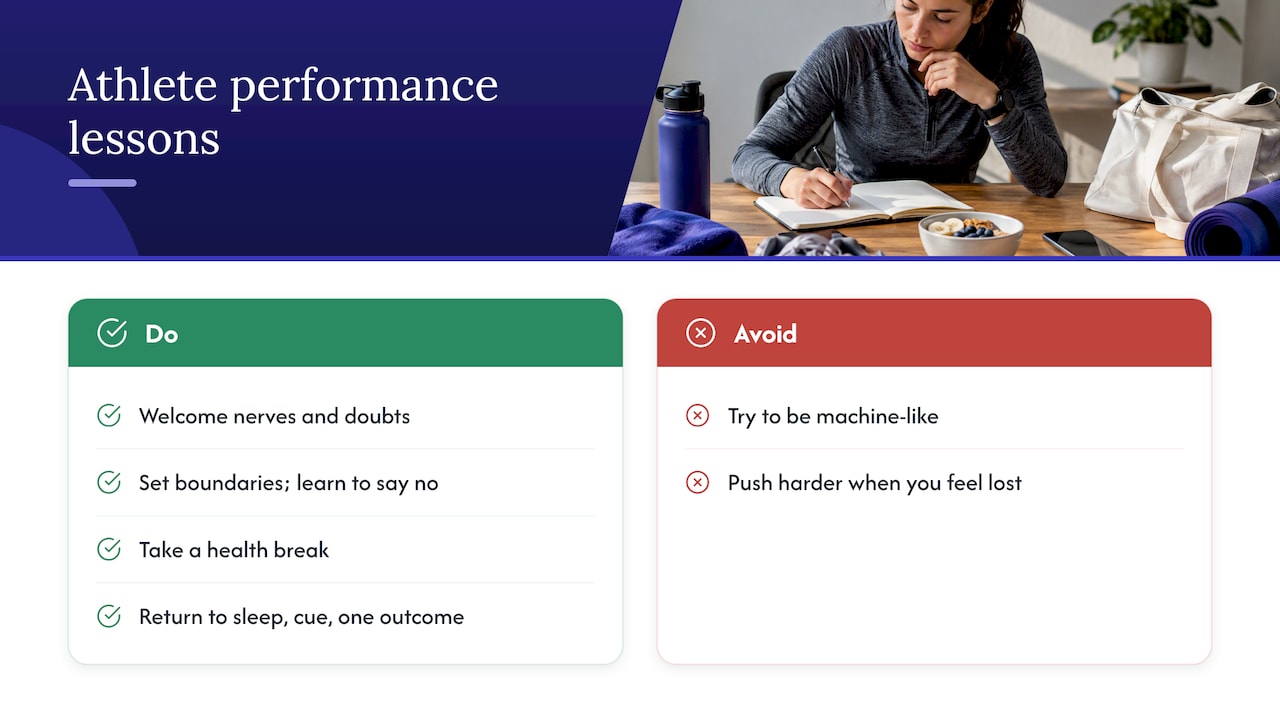
Be yourself, not a machine. Wrestler Sarah Hildebrandt said her results came after she stopped trying to be a stoic, machine-like competitor. In her exclusive interview, she describes rediscovering her authentic self and trusting her own mind and heart. Nerves and doubts weren’t suppressed, they were welcomed as part of being present.
Boundaries are a performance tool. Simone Biles described choosing boundaries over burnout, including learning to say no. Stepping back is not weakness. It’s a tactical reset.
A break can be a launch pad. Surfer Caroline Marks took a health break during the 2022 season, then came back to win her first world title and Olympic gold less than 12 months apart.
When you feel lost, the answer is rarely to push harder. Go back to basics: sleep, your cue, your one outcome. Then rebuild.
For teams working with young athletes on nerves, our piece on performance anxiety and psychological skills training goes deeper.
A two-month plan you can actually follow
Here’s how I’d build high performance habits without burning out in week two.
Weeks 1 and 2: choose one
Pick one habit from the six. Make it small enough that you can’t say no on a bad day. Write the cue: “After X, I do Y.” Don’t add a second habit yet.
Weeks 3 to 6: protect the cue
This is where most people drop off, usually because the novelty is gone. Track it with a simple check mark. Miss a day? Do it the next day. Don’t restart the clock.
Weeks 7 to 9: test it under pressure
About the time the habit starts to feel automatic (remember, the median is 59 to 66 days), put it through a stressful week. A busy close, a tournament, a quarter-end. If it survives, it’s yours. If not, shrink it and try again. For the pressure side of this, see decision making under pressure.
After day 60: add the next one
Now add the second habit. Not before.
If you manage a team, build the habit into the group. A coachable mindset built with six research-backed habits over eight weeks follows the same logic, and team norms make it visible to everyone.
Our view: Training, Not Hacks
Here is where we stand, and it’s a little contrarian. Most high performance advice treats people like they lack information. They don’t. They know they should sleep more, listen better and focus on the right things. What they lack is practice, and someone to practice with.
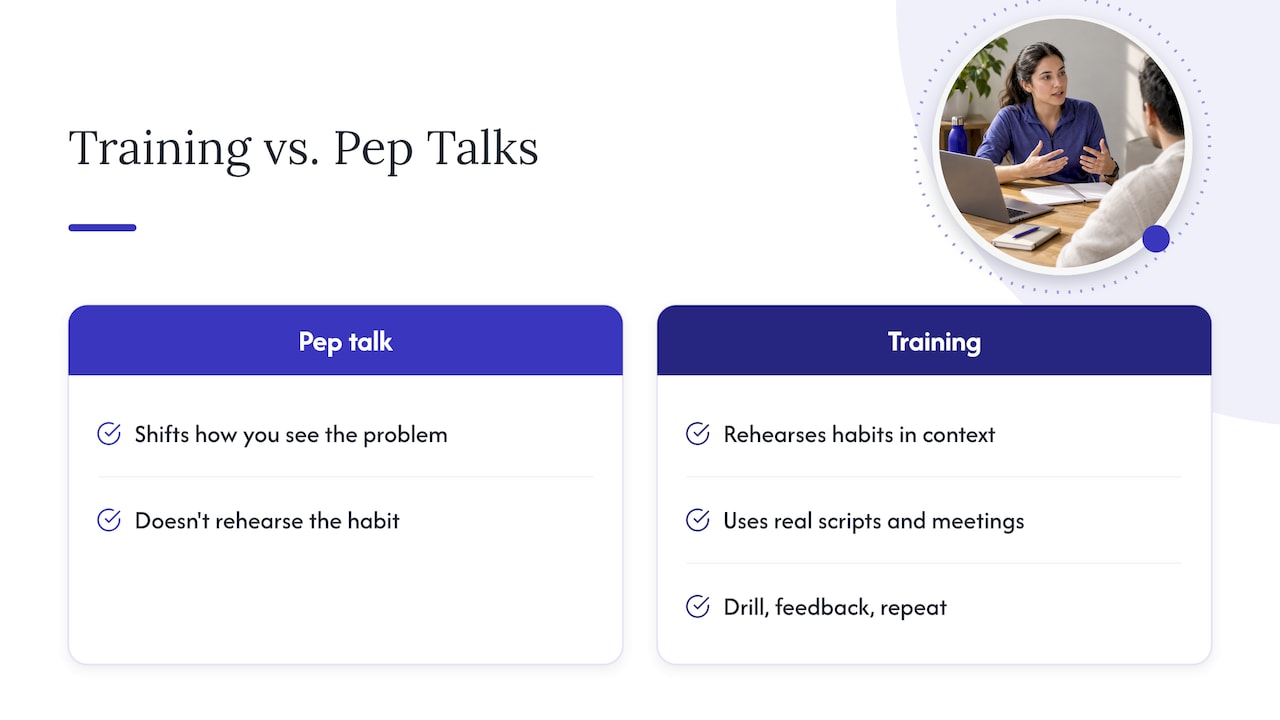
That’s why we build everything around training, not pep talks. In sports, nobody expects a motivational speech to improve your serve. You drill it. You get feedback. You do it again. Sales, leadership and wellness work the same way. A keynote can shift how you see the problem. The habit only changes when you rehearse it, in your real environment, with your real scripts and your real meetings.
We also think the “more” culture got it backwards. The athletes who last are the ones who manage their internal state: they rest on purpose, they say no, and they trust themselves. High performance looks less like a machine and more like a person who has figured out what to protect.
If a habit makes you miserable, it won’t last 60 days. Find the version that fits your life, and stay with it long enough to find out whether it works.
— Middy
Bring this to your team
If you’re planning an event or a training for your company, brokerage, school or wellness organization, we can turn these habits into something your people practice, not just hear about. Habits, Not Hacks. is our corporate wellness keynote on building sustainable routines. For leaders, the Coached, Not Bossed. half day training puts coaching habits into practice, and for athletes and students, Find Your Lane. covers resilience and mindset.
FAQ
What are the six habits of high performers?
The framework most people mean is seek clarity, generate energy, raise necessity, increase productivity, develop influence, and demonstrate courage. They come from Brendon Burchard’s book on high performance. Think of them as six areas to practice, not a checklist to finish in a week.
How long does it take to build a high performance habit?
Plan on about two months. A 2024 meta-analysis found a median of 59 to 66 days, with individual results from 4 to 335 days. Consistent cues matter more than raw willpower.
How do I know if I’m a high performer?
Use the definition of succeeding beyond standard norms, consistently over the long term. Ask whether your results hold up across seasons, not just one good stretch. Also ask whether you can recover, say no, and keep your standards when things get hard.
Do I need a morning routine to be a high performer?
No, but mornings help. The same 2024 review found that morning practices generally showed stronger habit strength. What matters is a reliable cue. If a morning slot doesn’t fit your life, choose another consistent anchor and keep it.
Sources
- High Performance Habits: How Extraordinary People Become That Way (Goodreads)
- Winning: What the best athletes, teams and coaches do differently (McKinsey)
- Time to Form a Habit: A Systematic Review and Meta-Analysis (PubMed)
- Habit formation following routine-based versus time-based cue planning (PubMed)
- The relationship between sleep and work: A meta-analysis (APA PsycNet)
- Primary school physical activity, sleep, and recreational screen time on cognition (APA PsycNet)
- The importance of leader recovery for leader identity and behavior (APA PsycNet)
- Journal of Occupational Health Psychology manuscript (APA PsycNet)
- Sarah Hildebrandt exclusive (Olympics.com)
- Simone Biles exclusive (Olympics.com)
- Caroline Marks interview (Olympics.com)
Leave a Reply