Budget $10,000 to $25,000 for a solid professional keynote speaker in 2026 and treat that as your base fee, not your final number. If you’re working with a tighter budget, plenty of strong speakers fall under $5,000. The rest of this guide breaks down the bands, the hidden costs, and how to negotiate without burning a bridge.
TL;DR:
- Most bookings for local events fall under $5,000, with a median around $2,500, but corporate and association budgets often range from $10,000 to $50,000.
- A $10,000 fee generally secures a seasoned professional with media presence, while $25,000 typically involves a speaker with national recognition or niche expertise.
- Total costs often exceed the quote by 15% to 40% once travel, customization, and extra sessions are added, so budgeting upfront for these is crucial.
- Virtual rates are now comparable to in-person fees, but include additional costs like tech setup, platform licensing, and possible translation services.
- Negotiating merits include booking early, offering flexible arrangements, and proposing added value such as extra sessions or recorded materials instead of just seeking discounts.
Table of Contents
- Keynote Speaker Fees by Tier: Entry, Mid-Range, and Celebrity Pricing
- What Moves Speaker Fees Up or Down?
- What’s Actually Included in a Keynote Speaker Quote?
- Does Virtual or Hybrid Change the Price?
- How to Negotiate Speaker Fees Without Damaging the Relationship
- What Should Be in a Keynote Speaker Contract?
- Middy Matthews’ Perspective: Pay for Change, Not a Name
- How Middy Matthews Fits Your Budget and Your Goals
- Sources
- FAQ
Keynote Speaker Fees by Tier: Entry, Mid-Range, and Celebrity Pricing
The number you should budget depends entirely on which data set matches your event. Talkadot’s platform data shows two-thirds of all booked engagements land under $5,000, with the median sitting around $2,500 and roughly a significant proportion of engagements falling between $5,000 and $10,000. That’s the reality for local chapters, school programs, and small association meetings.
Corporate and association planners see a different picture. A joint industry survey found the average planner budget for a keynote hire at $22,449, with 47% of planner budgets falling between $10,000 and $50,000. Speakers themselves reported average fees closer to $14,000, and only 3% charged more than $30,000. Platform medians run lower because they capture a huge volume of small, local bookings. Bureau and planner surveys run higher because they sample established, professionally represented speakers working corporate and association circuits.
Here’s how that plays out at real budget levels:
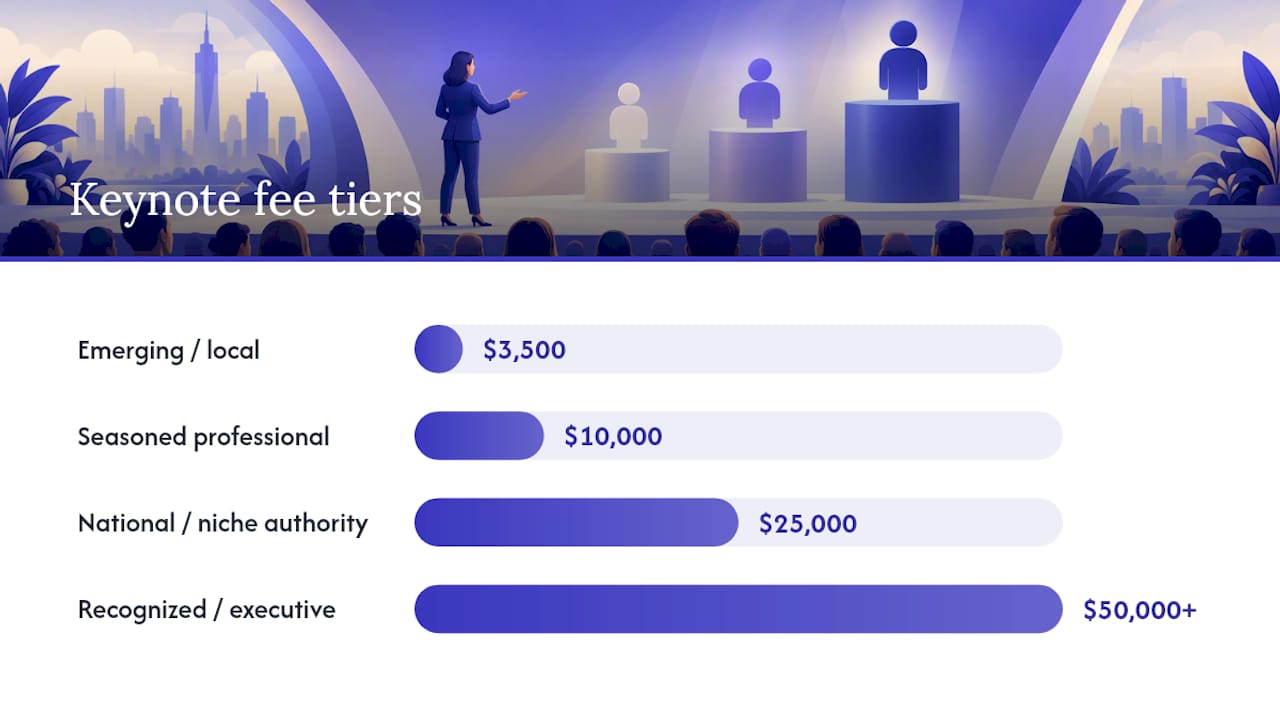
- $3,500: You’re in emerging-speaker or strong local-expert territory. Expect solid content delivery, but limited brand recognition and minimal customization.
- $10,000: This lands you a seasoned professional speaker with a track record, published book or media presence, and a fee that typically covers a keynote plus one prep call.
- $25,000: You’re now competing for speakers with national visibility, TEDx-level polish, or a niche industry authority status, often with room for one customized module.
- $50,000 and up: This tier includes recognized authors, former executives with household-name companies, and category leaders. True celebrity names (household TV or political figures) frequently start well above six figures and are negotiated case by case.
A common professional keynote for corporate events falls between $10,000 and $30,000, and that published number typically covers the talk itself and a single planning call. Anything beyond that, customization, extra breakout sessions, deeper research into your industry, gets billed on top.
What Moves Speaker Fees Up or Down?
Two speakers with similar résumés can charge wildly different rates. The gap usually comes down to four factors you can actually assess before you call.
- Demand and proven results. A speaker with a steady stream of five-star post-event surveys and repeat bookings can charge more, because planners are paying for predictability. Talkadot data suggests speakers who can show high response volume from past audiences tend to command higher fees than those who can’t produce that proof.
- Customization and prep time. A generic keynote costs less than a talk rebuilt around your company’s data, your sales numbers, or your specific leadership challenges. Every hour a speaker spends on research and rewrites gets priced into the fee.
- Booking channel and timing. Going direct to a speaker often costs less than booking through a bureau, since bureau commissions get folded into the published rate. Seasonality matters too. Fall conference season and January kickoff season are peak demand windows, and calendars fill fast.
- Industry fit and measurable outcomes. A speaker who can point to specific behavior change in sales numbers or retention rates after past engagements can justify a premium over a motivational speaker offering general inspiration.
Of these four, timing and booking channel are the two you actually control. Reputation and outcomes are baked in before you ever pick up the phone.
What’s Actually Included in a Keynote Speaker Quote?
A quoted fee is rarely the whole story. Most speaker agreements cover the keynote delivery itself, one planning or prep call, and sometimes standard domestic travel. Everything past that baseline is where the line-item surprises tend to show up.
Common exclusions and add-ons include:
- Deep customization beyond a single prep call (extra research, custom slides tied to your data)
- Additional sessions, such as a breakout workshop or a Q&A add-on
- Recording rights and licensing for internal or marketing use after the event
- Airfare upgrades, hotel nights beyond one, or ground transportation in high-cost cities
- Meet-and-greet, book signing, or VIP reception time before or after the main talk
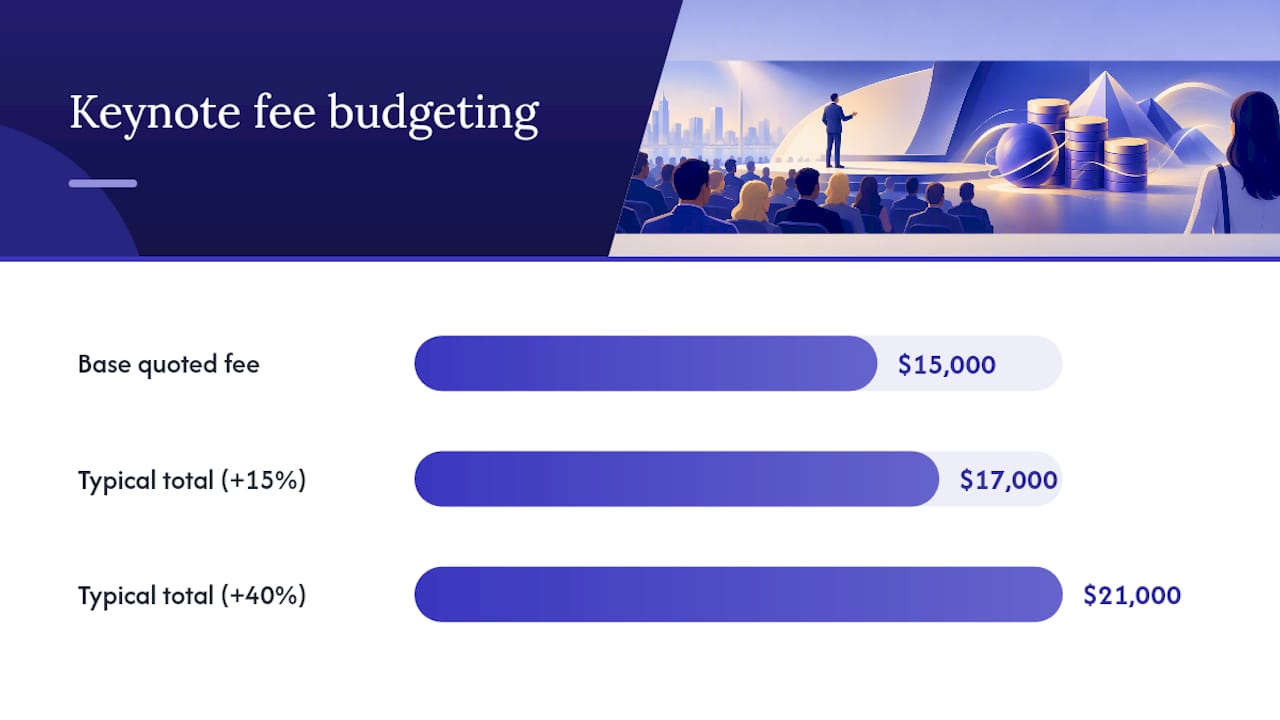
Statistic to budget around: total all-in costs typically run 15% to 40% above the base quoted fee once travel, customization, and extra sessions get added. If a speaker quotes $15,000, plan for $17,000 to $21,000 once everything is finalized. Building that cushion into your budget from day one saves you from an awkward conversation with finance three weeks before the event.
Does Virtual or Hybrid Change the Price?
Virtual keynotes are not automatically half the cost of in-person ones anymore, and that assumption trips up a lot of planners still budgeting off 2020 numbers. Early in the pandemic, virtual fees often ran 40% to 60% lower than in-person rates. That gap has been closing as speakers invest in their own production quality and as in-person demand pulls fees back up across the board.
Hybrid and virtual formats also carry their own cost line that has nothing to do with the speaker’s fee:
- Professional lighting, camera, and audio setup on the speaker’s end
- Platform licensing and technical producer support on your end
- Live captioning or translation for multilingual or international audiences (a language services partner like Unalingua can help scope this for global events)
- Rehearsal time and tech check calls beyond a standard prep session
Pro Tip: Always ask for a written virtual rate separate from the in-person rate, even if the speaker quotes one number verbally. Get the production responsibilities (who provides the crew, who pays for the platform) spelled out in the contract, not assumed.
How to Negotiate Speaker Fees Without Damaging the Relationship
The planners who get the best rates aren’t the toughest negotiators. They’re the ones who understand what a speaker actually values beyond the check.
- Book early. Speakers routinely give better rates to planners who commit months out rather than those calling six weeks before the event. Early bookings also give you first pick of preferred dates to scrambling around a filled calendar.
- Negotiate value, not just price. Offering flexible dates, a multi-event package (keynote plus a follow-up workshop), or promotional exposure to your audience often gets you further than simply asking for a lower number.
- Understand bureau math. If you’re working through a speaker bureau, know that commissions are typically already built into the published fee. Asking a bureau to shave a few thousand dollars off rarely works the same way as negotiating add-ons directly with an independently booked speaker.
- Add value into the contract instead of cutting the fee. Rather than pushing a speaker to drop their rate, ask for an extra Q&A block, a recorded version for internal training, or a shorter breakout session at no added cost. Speakers protect their fee structure across the industry, but they’ll often flex on deliverables.
Pro Tip: If a speaker won’t move on price, ask what they can add instead. You’ll often get more value out of that conversation than out of a straight discount request.
What Should Be in a Keynote Speaker Contract?
Before you sign anything, confirm the scope in writing. PCMA’s advice on speaker contracts is to finalize every deliverable, prep calls, custom materials, Q&A time, meet-and-greets, before you finalize the fee, so nothing gets added after the ink dries.
- Number of prep calls and who initiates them
- Recording and licensing terms, since re-use rights often carry a separate fee
- A pivot-to-virtual clause with a pre-agreed reduced rate if the event format changes
- Cancellation terms, including any late-booking premium for last-minute swaps
- Travel handling: flat fee versus receipts, and who books what
| Deliverable | What to confirm before signing |
|---|---|
| Prep calls | Number included and who schedules them |
| Recording rights | Internal use vs. public/marketing use, separate fee or included |
| Virtual pivot | Reduced rate formula agreed in advance |
| Cancellation | Notice period and any late-booking premium |
| Travel | Flat fee vs. receipt reimbursement |
PCMA offers a downloadable speaker agreement template that covers most of this out of the box.
Middy Matthews’ Perspective: Pay for Change, Not a Name
The biggest mistake I see planners make is chasing the biggest name their budget allows instead of the speaker most likely to change behavior in the room. For sales kickoffs and leadership events, fit beats fame every time. Before you book, ask what specific outcome the speaker has produced for a similar audience, not just how many followers they have.
— Middy
How Middy Matthews Fits Your Budget and Your Goals
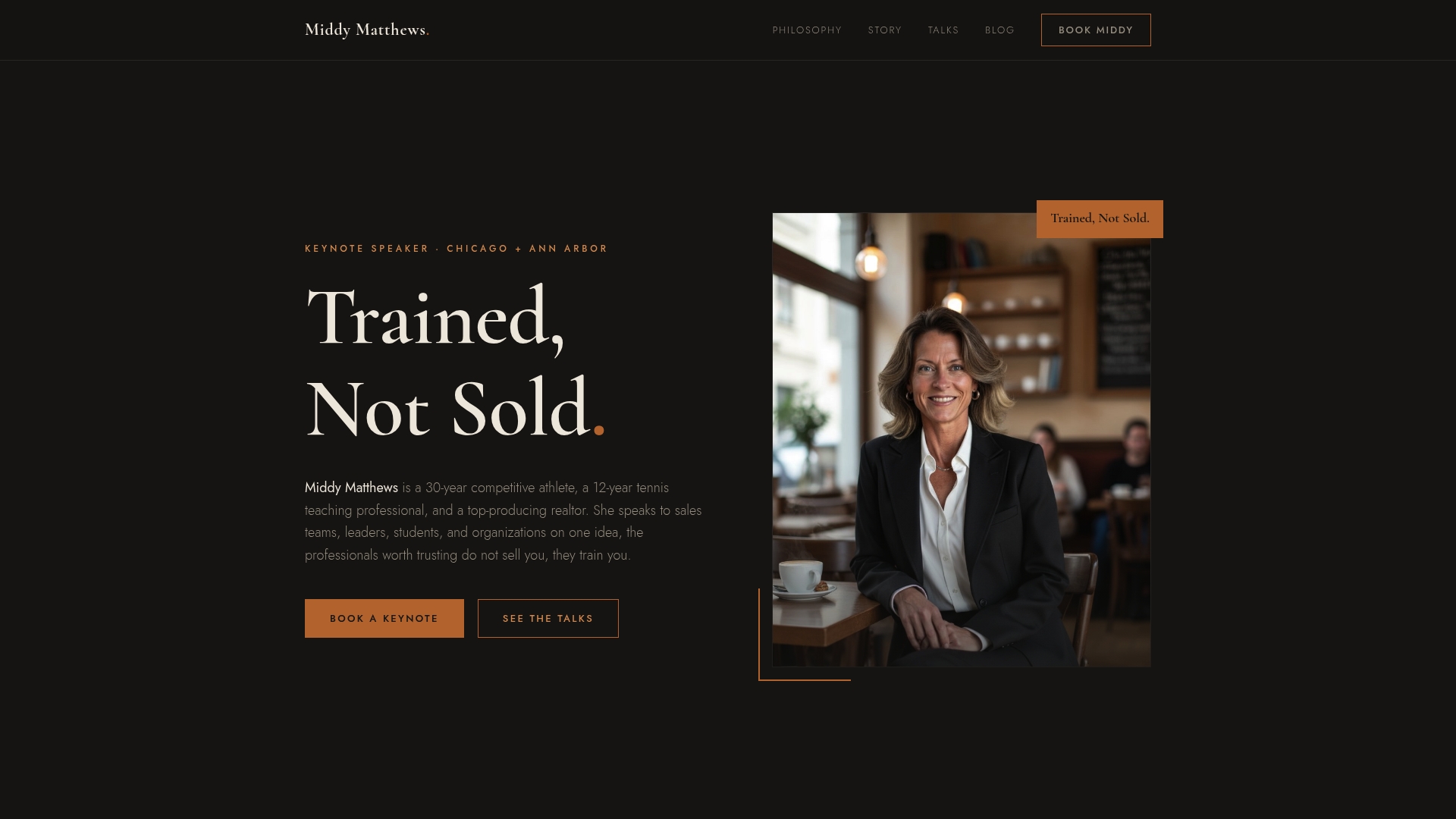
If you’re weighing keynote speaker fees against what you actually need, results you can measure once the event is over, Middy’s lineup gives you a clear match for the room you’re planning. Trained, Not Sold. fits sales kickoffs and real estate brokerage events where the goal is a mindset shift, not another script. Coached, Not Bossed. works for leadership conferences and corporate teams building a coaching culture instead of a command-and-control one. For student groups and young athletes, Find Your Lane. delivers resilience and direction rather than generic motivation.
Corporate wellness events fit naturally with Habits, Not Hacks., built around sustainable team habits instead of quick fixes. When you reach out, include your event date range, expected audience size, and the specific outcome you want attendees to walk away with. That detail alone helps shape a proposal that matches your actual budget instead of a generic quote.
Sources
- What most events spend on a speaker
- Survey explores speaker and planner dynamics
- Speaker Fees: What to Budget for a Keynote Speaker in 2026
- Keynote Speaker Fees 2026: What Actually Determines Speaker Pricing
FAQ
How much should you pay a keynote speaker?
Budget $10,000 to $30,000 for a solid professional keynote speaker at a corporate or association event, based on industry survey averages. For smaller local events, Talkadot’s data shows two-thirds of bookings fall under $5,000, so match the number to your event type rather than assuming one figure fits every room.
How much does Michelle Obama charge for speaking engagements?
Fees for former first ladies, presidents, and comparable public figures typically start well into six figures and are negotiated privately case by case. Publicly available industry data does not report an exact confirmed figure, so treat any number you see online as unverified.
What is Oprah’s speaking fee?
Oprah Winfrey’s fee is not publicly published and is negotiated through private representation for each engagement. Speakers at this level of cultural recognition fall far outside the standard $10,000 to $50,000 corporate keynote range this guide covers.
What is Tony Robbins’ speaking fee?
Tony Robbins commands a fee well above the standard professional keynote range, reflecting his decades of brand recognition and demand across corporate and public events. As with other top-tier names, an exact confirmed rate is not publicly listed and is typically negotiated directly through his team.
What does Middy Matthews charge for a keynote?
Current pricing for Middy’s keynote and workshop formats, including Trained, Not Sold. and Coached, Not Bossed., is available directly through her site. Reach out with your event date, audience size, and goals for a proposal matched to your program.
Leave a Reply