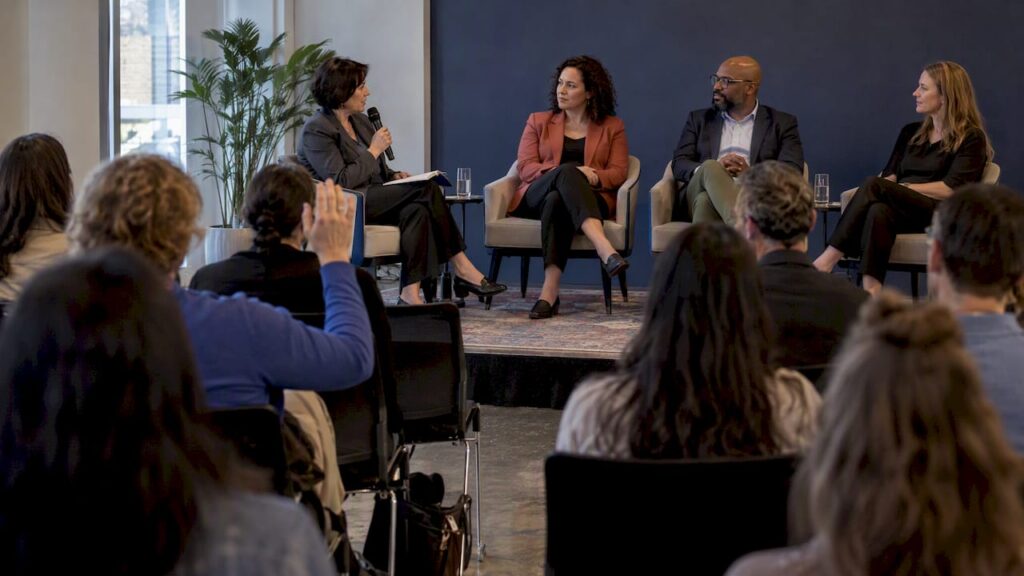
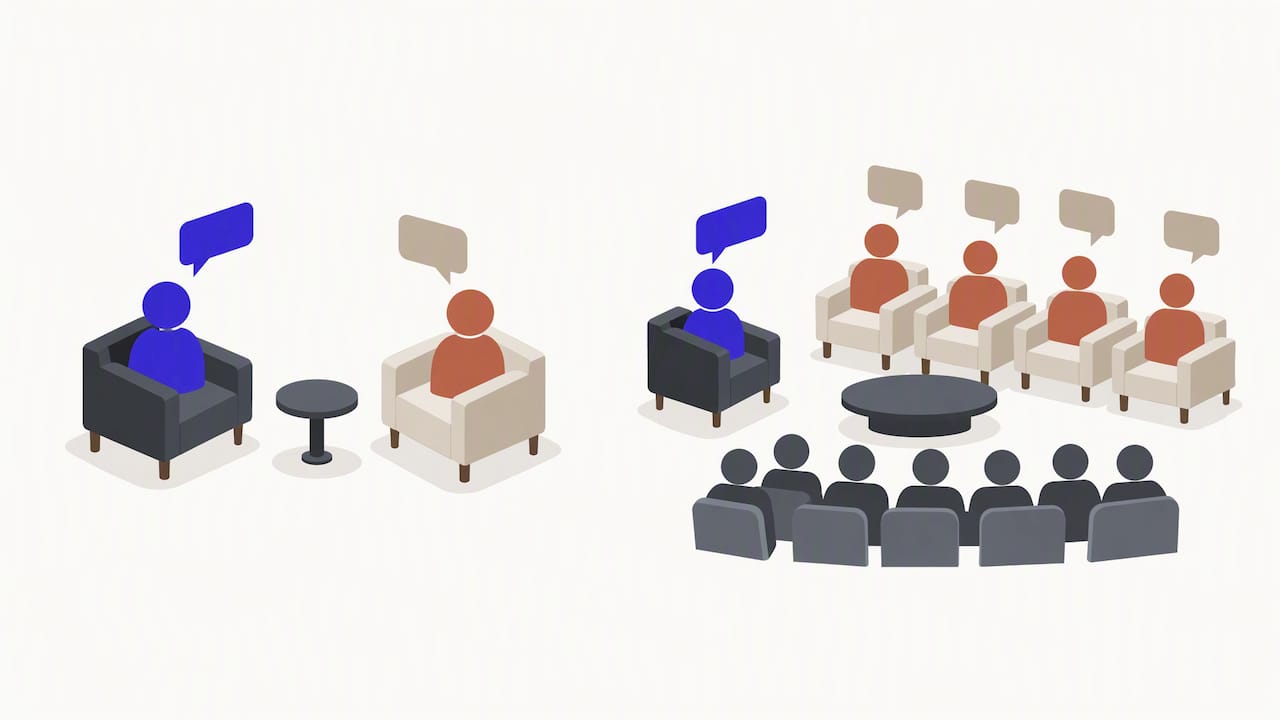
A fireside chat is a one-on-one conversational interview between a host and a guest, built for depth and personal story. A panel is a moderator guiding three to five experts through contrasting views, built for breadth and debate. Pick a fireside chat when one person’s experience is the draw, and a panel when your audience needs multiple perspectives.
TL;DR:
- Fireside chats typically run 30 to 45 minutes, while panels run 45 to 60, though focused panels may finish sooner.
- Fireside hosts should prepare five or six prompts that invite stories, while arranging microphones for both speakers and a clear route for audience questions.
- Panel moderators should meet with speakers before the event, set visible timing cues, and assign topics in advance to prevent repeated answers.
- Across either format, moderators should keep their own comments brief, connect answers by paraphrasing, and rebalance airtime when one speaker dominates.
- Collect audience questions before the event or use a mid session poll; panels especially benefit from structured ways to surface different viewpoints.
Table of Contents
- What a fireside chat looks like: structure, tone, and timing
- What a panel discussion looks like: structure, tone, and timing
- Panel vs fireside chat at a glance
- When to choose each format for your event
- How to plan and moderate either format well
- What years of guided conversations have taught me about good questions
- Bring in a moderator who knows how to run the room
- FAQ
- Sources
What a fireside chat looks like: structure, tone, and timing
A fireside chat runs on one simple structure: a host asks questions, a guest answers, and the audience listens in on what feels like a real conversation. There’s no panel to balance and no competing voices to manage. The host prepares questions in advance, but the best moments usually come from a well-placed follow-up, not the script.
Most fireside chats run 30 to 45 minutes, long enough to get past rehearsed answers but short enough to hold attention. Staging stays minimal: two chairs facing each other or angled toward the crowd, no podium, and usually no slides. The American Society of Anesthesiologists’ own moderator guidance confirms this: no AV, no deck, just two people talking.
Before you book the room, line up the basics:
- Confirm seating that faces both the guest and the audience, not a stage-and-podium setup.
- Test microphones for both host and guest, plus a handheld or roaming mic for audience Q&A.
- Decide how audience questions will come in: live mic, submitted cards, or a moderated app.
Pro Tip: Draft five or six open-ended prompts that invite a story or a lesson learned, not a yes-or-no answer. The best fireside chats feel unscripted because the questions were built to sound that way.
What a panel discussion looks like: structure, tone, and timing
A panel swaps the one-on-one dynamic for a group conversation. One moderator leads three to five panelists, usually starting with brief opening positions before moving into open discussion and audience Q&A. The tone stays conversational, but there’s more to coordinate because more voices are competing for airtime.
Expect a panel to run 45 to 60 minutes, longer than a fireside chat because each panelist needs room to respond. Staging calls for more planning too: individual microphones, a visible timekeeping method, and at least one coordination meeting before the event so panelists know the direction and avoid stepping on each other.
The moderator’s job is harder than it looks. Research from Stanford Graduate School of Business points to the habits that separate a compelling panel from a forgettable one: keep contributions short, paraphrase to connect ideas across speakers, and rebalance the floor when one voice starts to dominate.
Before the session, work through this checklist:
- Hold a pre-event call or meeting so panelists know the questions and each other.
- Agree on time signals (a hand raise, a card, a clock visible to panelists).
- Give each panelist a short brief on what not to repeat, so answers don’t overlap.
Pro Tip: Rehearse the handoffs between panelists out loud, even briefly. A moderator who can say “that connects to what you mentioned earlier” sounds prepared, not scripted.
Panel vs fireside chat at a glance
| Dimension | Fireside chat | Panel discussion |
|---|---|---|
| Speakers | 1 host + 1 guest | 1 moderator + 3 to 5 panelists |
| Tone | Personal, conversational | Discussion-driven, multiple viewpoints |
| Typical duration | 30 to 45 minutes | 45 to 60 minutes |
| Slides or AV | Usually none | Minimal, mainly microphones and timing cues |
| Audience role | Questions near the end | Questions throughout, often polled or submitted early |
These ranges are planning guidance, not fixed rules. A fireside chat with a guest whose story runs deep can stretch past 45 minutes, and a panel with a tight, specific topic might wrap in under 45. Use the numbers to set expectations with your venue and AV team, then adjust for the actual conversation.
When to choose each format for your event
The right format depends on what you want the audience to walk away with: one perspective explored in depth, or several perspectives compared.
Choose a fireside chat when:
- A single leader’s story carries the session, such as a founder reflecting on a turning point.
- You want vulnerable, lived-experience content that a group setting would flatten.
- The guest is more compelling one-on-one than performing for a crowd.
Choose a panel when:
- The topic is genuinely contested and benefits from disagreement, not consensus.
- You need practitioner comparisons, such as agents describing different approaches to the same problem.
- The issue touches multiple stakeholders who each bring a different stake in the outcome.
A conference track built around industry trends often works better as a panel, since attendees expect to hear where experts disagree. A town hall built around a founder’s turnaround story works better as a fireside chat, since the audience came to hear a personal story, not referee a debate. If you’re unsure, ask whether your draw is one specific story or a spread of expert opinion.
How to plan and moderate either format well
Both formats fail for the same reasons: no shared outline, no rehearsal, and a moderator who hasn’t thought past the first question.
Start with the basics. Build a shared outline and meet with your speakers at least once beforehand to agree on timing and signals. For panels especially, give each panelist a short script or notes to prevent tangents.
Design audience engagement instead of hoping for it. Collect questions in advance with a short survey, use a quick poll mid-session, or invite small-group reactions before opening the floor. This works for both formats, though panels benefit more since there are more viewpoints to react to.
During the session, strong moderation looks the same whether you’re running one guest or five: paraphrase answers to connect ideas, bridge between topics, keep your own commentary short, and rebalance the floor if one person talks too long.
If you’re running the session online, add these steps:
- Test every panelist’s camera and audio setup ahead of time, not minutes before.
- Ask panelists to keep cameras on and mute when not speaking.
- Assign a colleague to watch the chat and surface the best questions to you live.
Pro Tip: Script your transitions between questions or panelists in advance, and keep one backup prompt ready in case audience participation stalls. A prepared moderator can fill a quiet moment without it feeling like a gap.
For a ready set of prompts you can adapt on the spot, our panel moderator questions give you a starting point that turns a good panel into one with real takeaways. If you want more structure around event-day logistics, this event run-of-show template lays out the production steps that keep timing and handoffs on track.
What years of guided conversations have taught me about good questions
I’ve spent years coaching people to ask better questions, whether in a sales conversation or on a stage. The lesson carries over directly to moderating: a question built to teach beats a question built to perform. When I moderate a fireside chat or a panel, I’m not looking for a clever soundbite. I’m looking for the question that gets someone to explain how they actually think.
That’s the same instinct behind Training, Not Selling: the goal is understanding, not a polished pitch. A moderator who asks “what would you do differently” gets a more honest answer than one who asks “what’s your advice.” If you want more on how that philosophy shapes coaching conversations, our resources on sales mindset and training go deeper.
— Middy
Bring in a moderator who knows how to run the room
If you’d rather hand off the moderating and focus on your event, our Panels Moderation & guest offering puts someone in the chair who knows how to keep a fireside chat personal and a panel sharp, from the pre-event outline through the final question.
We also run Interactive workshop sessions for teams that want the same training-not-selling approach applied beyond the stage. Reach out through Middy to check availability and talk through your event format.
FAQ
What defines a fireside chat?
A fireside chat is an informal, conversational interview between a host and a guest, typically held without slides or a podium. It’s built for depth, letting a single guest’s experience or story unfold through guided questions rather than a prepared speech.
What are the key differences between a symposium and a panel discussion?
A symposium is presentation-led, with each speaker delivering a prepared talk on an aspect of a shared topic. A panel discussion is discussion-led, with panelists responding to a moderator and each other rather than presenting separately.
What is another name for a panel discussion?
“Panel” is the standard shorthand for a panel discussion, and the two terms are used interchangeably in event planning. It’s sometimes loosely compared to a symposium, but the formats aren’t interchangeable since a symposium centers on individual presentations.
What does a panelist do in a conference?
A panelist shares expertise on a shared topic, typically opening with a brief position before responding to the moderator’s questions and other panelists’ points. Panelists also field audience questions during the Q&A portion of the session.
Sources
- Make Your Next Panel Discussion More Compelling | Stanford Graduate School of Business
- What Is a Fireside Chat? Format, Questions, Tips
- Working Together
Leave a Reply