
The best leadership conference themes today combine AI capability with human judgment, regenerative sustainability, trust and governance, talent reskilling, and wellbeing. Those five threads show up again and again in current programming, alongside inclusion, innovation, economic resilience, and hybrid experience design. Below, I break down each theme with the reasoning behind it and session hooks you can build an agenda around.
TL;DR:
- Most leadership conferences focus on themes like AI in leadership or sustainability but need clear outcomes, such as governance checklists or practical skillbuilding.
- Effective agendas pair keynote talks with hands-on labs or workshops that enable attendees to apply concepts immediately, like drafting policies or prototyping process changes.
- Inclusion should be integrated into the agenda through diverse speaker lineups, mixed-level breakout groups, and session prompts that highlight different perspectives without adding separate panels.
- Selecting a theme should start with desired results and fit for the audience, validating it with stakeholder feedback or pilot sessions before finalizing the agenda.
- Prioritizing measurable outcomes and audience relevance over trendiness and speaker fame results in more impactful leadership conference programs.
Table of Contents
- 1. Leadership conference theme ideas worth building an agenda around
- How do you choose the right theme for your conference?
- Turning a theme into a working agenda
- Why Middy’s background fits these themes
- How do you build inclusion into a leadership conference theme?
- What event planners get wrong about leadership themes
- Book Middy for a keynote or workshop built around these themes
- Sources
- FAQ
1. Leadership conference theme ideas worth building an agenda around
I’m not going to hand you an abstract trend list. Here are the themes I see working right now, with the “why” and a session hook attached to each one.
- AI as a capability multiplier. Conference programming is shifting away from AI-as-threat toward AI-as-leverage, framing it around what leaders can now do faster rather than what gets automated away. Conference Board programming reflects this shift, prioritizing peer-led sessions with practical takeaways over theory-heavy keynotes. Session hook: a keynote on “redesigning work around AI” paired with a workshop lab where teams map which decisions stay human and which get machine support.
- AI governance and transparency. Trust in AI at work is conditional, not automatic. The VOLOT 2026 Report found that leaders of tomorrow and senior executives extend trust in AI tools only when governance is transparent and gains get reinvested in people. Session hook: a panel on accountable AI deployment, followed by a breakout where attendees draft a one-page governance checklist for their own team.
- Regenerative leadership. Sustainability sessions are moving past carbon counting and compliance metrics. The ILA conference streams push sustainability programming toward systems thinking, resilience, and social cohesion instead of reporting dashboards. Session hook: a keynote reframing sustainability as community resilience. Plus, a workshop mapping an organization’s role in its local ecosystem.
- Trust, ethics, and accountability. This theme sits next to AI governance but stands on its own, covering decision transparency, fair process, and how leaders earn credibility when change is constant. Session hook: a workshop where small groups audit a real decision for transparency gaps.
- Talent reskilling and future skills. Leadership development is now the top HR priority, yet most HR teams admit they are not delivering it well. The McLean & Company HR trends report found that only about 35% of HR teams report strong performance running these programs in 2026. Session hook: a keynote on closing the capability gap, paired with a peer-coaching lab where managers practice coaching conversations instead of just hearing about them.
- Wellbeing as organizational policy, not a perk. The strongest wellbeing tracks pair resilience skill-building with real policy conversations, drawing on examples from recent leadership conference recaps where trust, technology, and talent show up as recurring themes. Session hook: a workshop on sustainable habits for high performers, followed by a policy roundtable on workload and recovery.
- Inclusion built into decision-making. Rather than a standalone diversity panel, inclusion now shows up inside capability and governance sessions, as a filter leaders apply to who gets heard and promoted. Session hook: a workshop where attendees pressure-test a real promotion or hiring decision for blind spots.
- Innovation and renewal. Conferences framing themselves around reinvention, drawing on the same renewal language seen in recent leadership conference coverage, tend to pair a bold keynote with structured experimentation time. Session hook: a lab where teams prototype one small process change before leaving.
- Economic resilience. With budgets tighter and demographic shifts changing who is entering the workforce, sessions on doing more with flat headcount are gaining ground. Session hook: a panel on leading through resource constraints without burning out the team.
- Hybrid experience design. As hybrid attendance becomes the default, programming now treats remote participants as a design constraint from the start, not an afterthought. Session hook: a workshop on running hybrid team meetings that actually include the remote half of the room.
How do you choose the right theme for your conference?
Start with the outcome, not the topic. Are you building a skill, shifting culture, aligning strategy, or strengthening your brand in the market? That single question narrows your options faster than any trend list.
Once you know the outcome, run it through a short checklist:
- Audience fit: does the theme speak to where your attendees actually sit, executives versus emerging leaders versus a mixed room?
- Measurable outcomes: can you name one thing attendees should be able to do differently in 30 days?
- Speaker and content fit: do you have speakers who can go deep on this theme, not just reference it?
- Logistics and budget: does the format you want (keynote, workshop, half-day training) fit your timeline and room?
- Preparation runway: have you built in enough lead time to brief speakers and test the content?
Validate before you commit. A short stakeholder survey or a pilot digital session with a slice of your audience tells you fast whether a theme lands or falls flat.
Pro Tip: Run your keynote topic past five attendees before you lock the agenda. If they can’t tell you what they’d do differently afterward, the theme needs sharpening.
Turning a theme into a working agenda
A theme on a slide does nothing. The format mix is what makes it stick.
- Capability themes (AI, reskilling): keynote, then a hands-on lab where teams apply the idea to a real task, then a short peer-coaching round.
- Governance and trust themes: panel discussion, then a breakout where attendees draft a policy or checklist they take home.
- Wellbeing themes: workshop on practical habits, paired with a policy roundtable so the skill-building connects to actual organizational change.
- Innovation themes: bold keynote, then an experimentation lab, then a short action-plan session before people leave the room.
Half-day agendas work best with two formats; full-day agendas can stack three or four without losing energy, as long as peer coaching or action planning closes the day instead of another lecture.
Why Middy’s background fits these themes
Middy Matthews brings over 30 years combining competitive sports and real estate, built around a “Training, Not Selling” philosophy that treats resilience and teamwork as the real drivers of results. That background maps directly onto capability-building and wellbeing themes: sales-as-leadership workshops for teams who dislike pushy tactics, and sustainable-habit programming for leaders managing burnout risk. Full background is on her author page.
How do you build inclusion into a leadership conference theme?
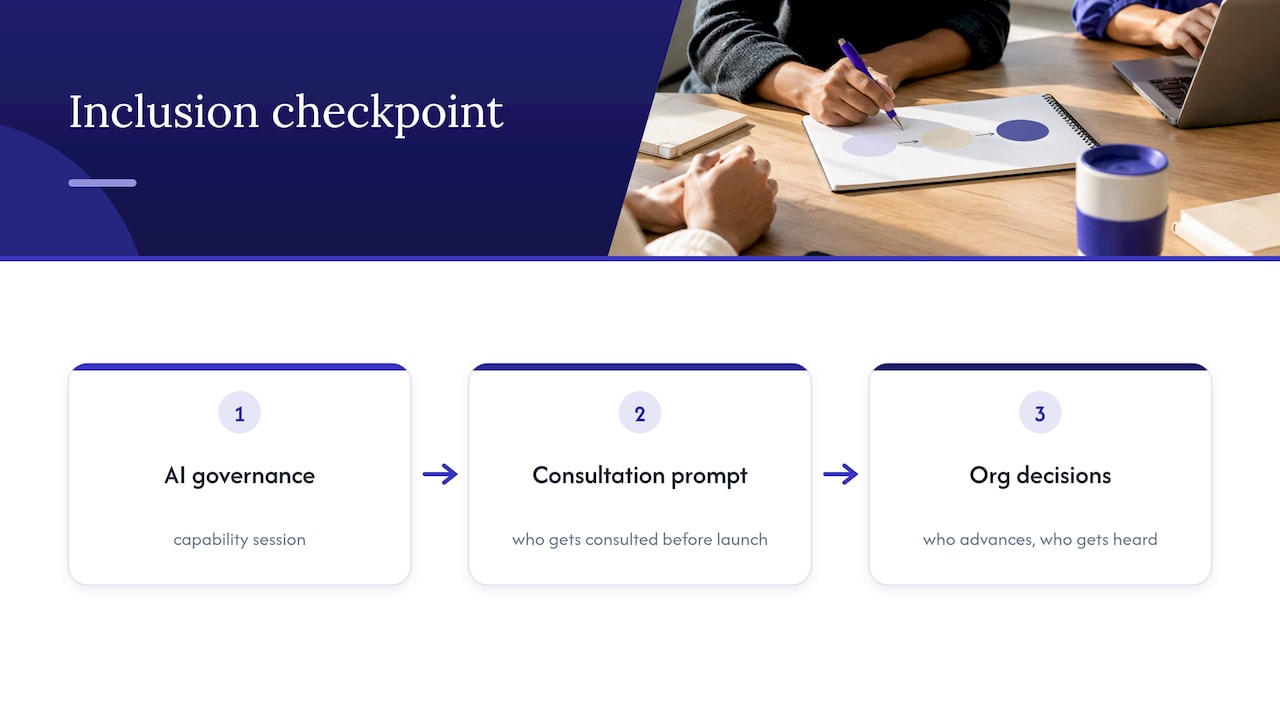
Inclusion works best woven through the agenda rather than boxed into a single panel. A capability session on AI governance, for example, can include a prompt asking who gets consulted before a tool goes live, which turns a technical topic into an inclusion conversation without a separate slot.
Speaker selection matters just as much as session design. A lineup that only features one leadership archetype signals to the room who the conference is really for, even if the content itself is broad.
Format choices carry weight too. Breakout groups that mix seniority levels, rather than separating executives from emerging leaders, surface perspectives a single-track agenda misses entirely. Pairing a resilience workshop with a policy roundtable, the same recipe that works for wellbeing themes, lets attendees connect personal skill-building to organizational decisions about who advances and who gets heard.
The simplest test: ask whether someone outside the usual leadership profile would see themselves in the agenda before you finalize it. If the answer is no, the theme needs another pass.
What event planners get wrong about leadership themes
Most planners chase the trend headline instead of the outcome it’s supposed to produce. A conference built around “AI and the future of work” sounds current, but if nobody leaves with a governance checklist or a redesigned workflow, the theme was just a label on a brochure.
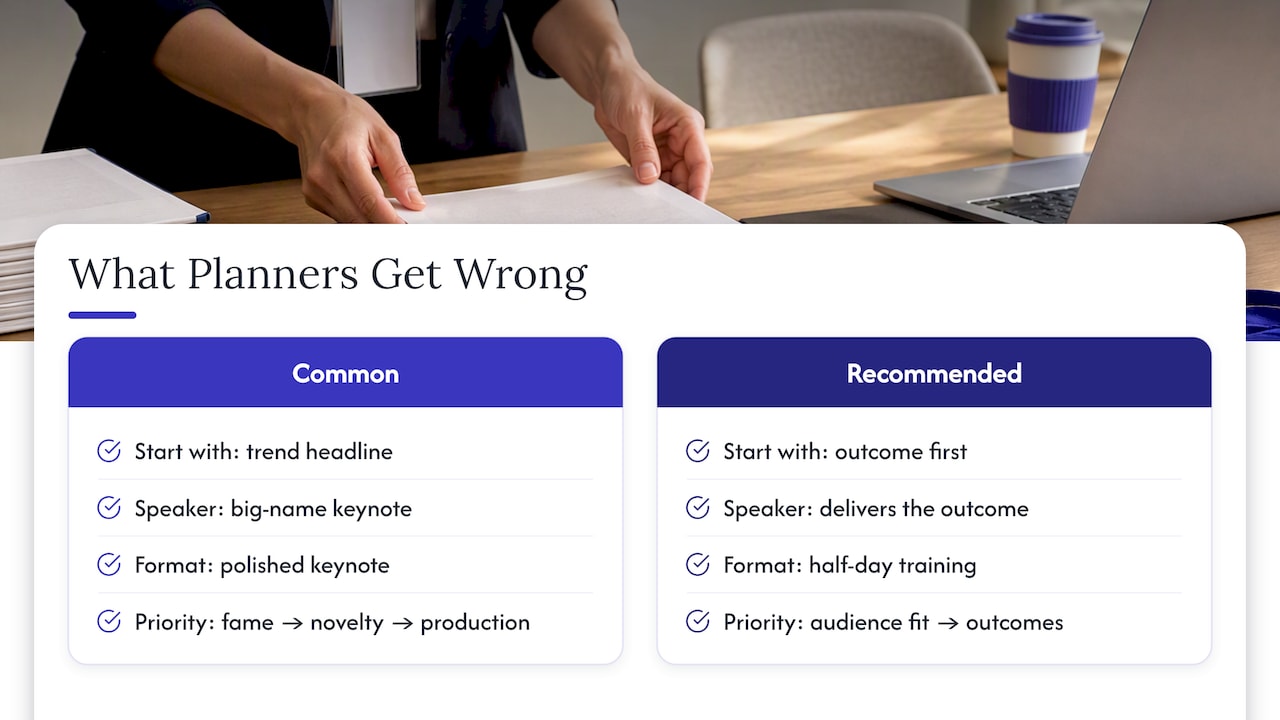
The conventional advice tells you to pick a hot topic and book a big name. I’d flip that. Pick the outcome first, then find the format and speaker that actually deliver it. A half-day training that teaches managers to run one better coaching conversation beats a polished keynote that inspires for an hour and fades by Monday.
What I’d prioritize first: audience fit and measurable outcomes, in that order. Everything else, speaker fame, theme novelty, production value, is secondary. Get those two right and the rest of the agenda tends to follow.
— Middy
Book Middy for a keynote or workshop built around these themes
Middy offers an interactive workshop and keynote for capability-building themes, plus half-day training for resilience and team culture tracks.

- Workshops and keynotes aligned with sales-as-leadership and capability themes.
- Trainings focused on resilience, culture, and leadership capacity.
- Contact via middy.pro for availability and booking.
Sources
- McLean & Company releases HR trends report for 2026; highlights growing gap between organizational change and leadership capacity
- Future: People & AI 2026 — Conference Board
- VOLOT 2026 Report
- ILA 2026 conference streams — Inclusive, innovative, sustainable leadership themes
FAQ
What are some leadership themes?
Current leadership conference themes center on AI paired with human judgment, regenerative sustainability, trust and governance, talent reskilling, and wellbeing. Inclusion, innovation, and hybrid experience design round out the list, each pairing well with a keynote-plus-workshop format.
What are some good themes for a leadership seminar?
Smaller seminars do well with a single focused theme rather than several broad ones, such as resilience and team culture or coaching versus managing. A half-day format built around resilience and leadership capacity tends to land better than a packed agenda trying to cover everything.
What are the key conference themes for 2026?
The themes drawing the most programming attention in 2026 are AI capability and governance, regenerative sustainability, and talent reskilling, with leadership development named the top HR priority even as only about 35% of HR teams report delivering these programs well. Wellbeing and trust-focused sessions continue to appear alongside them.
What are some good conference topic ideas?
Strong topic ideas pair a trend with a concrete action: AI governance paired with a policy-drafting lab, or sustainability reframed as community resilience rather than metrics reporting, following the regenerative leadership framing gaining traction in conference programming. Pick the topic based on the outcome you want attendees to walk away with, not the headline alone.
Leave a Reply