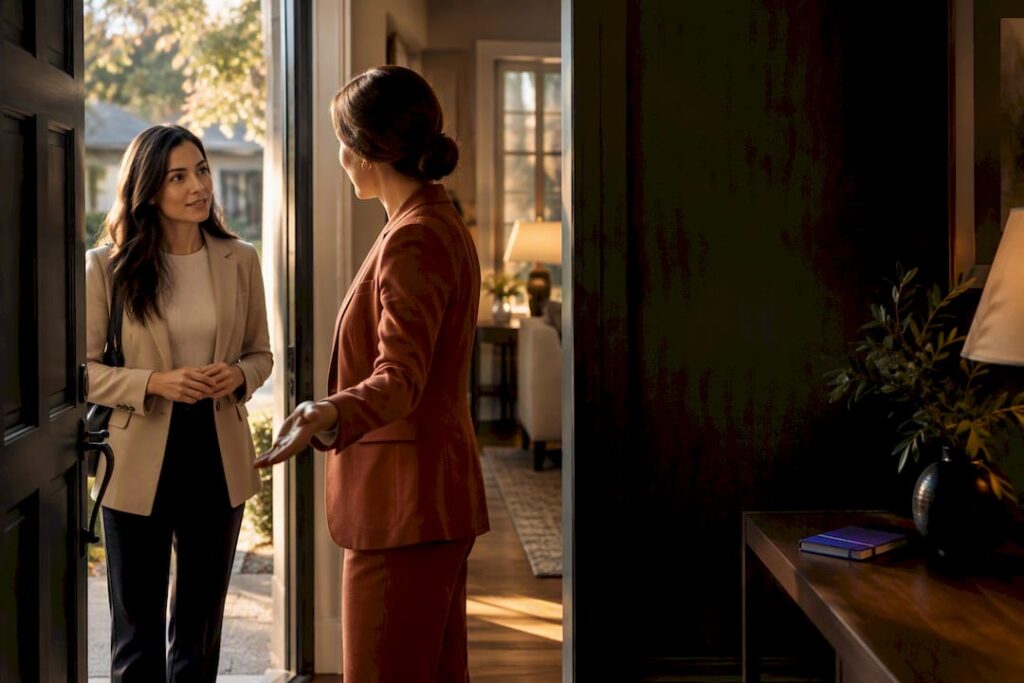
An open house works best when you treat it as a lead-generation campaign, not a walk-through. The three moves that matter most are targeted pre-event marketing that pulls in the right people, staging that makes those people confident enough to act, and a frictionless sign-in process followed by CRM-driven contact within 24 to 48 hours.
TL;DR:
- Pre-event marketing should focus on email campaigns, neighbor outreach, and signage targeting those already interested or nearby, not broad audiences.
- Staging and curb appeal must eliminate doubt by decluttering, deep cleaning, and highlighting lifestyle features to encourage emotional investment.
- Digital sign-in linked to CRM enables prompt follow-up within 24 to 48 hours, with scripts that build trust and gather qualifying information.
- Virtual or hybrid tours should supplement in-person events to expand reach, especially for out-of-area buyers, with registration and follow-up handled the same way.
- Slow attendance or bad weather can be mitigated with contingency plans like private showings, feedback collection, and ongoing community outreach.
Table of Contents
- A prioritized 1-14 day timeline and checklist agents can apply before the open house
- High-return marketing channels and the exact outreach cadence
- Staging, curb appeal, photography, and buyer-ready takeaway materials
- Run-of-show for the event: greeting, sign-in, traffic flow, and conversion moves
- How to capture leads with low friction and scripts to use for greeting, qualifying, and neighbors
- A prioritized follow-up sequence within 24-48 hours
- Legal and compliance considerations during open houses
- Contingency planning for low attendance or bad weather
- Tips for hosting virtual or hybrid open houses to expand reach
- Apply “Training, Not Selling” to open houses
- Turn open house training into a repeatable system
- Sources
- FAQ
A prioritized 1-14 day timeline and checklist agents can apply before the open house
Everything you do in the two weeks before the event either builds attendance or it doesn’t. Start by deciding when to hold the open house relative to the listing date, then set a real number for your goals: how many visitors, how many qualified leads, how many follow-up appointments you want booked by day three.
Work backward from event day:
- Days 10–14: Book photography and a virtual tour, confirm the listing description, and set your attendance and lead goals.
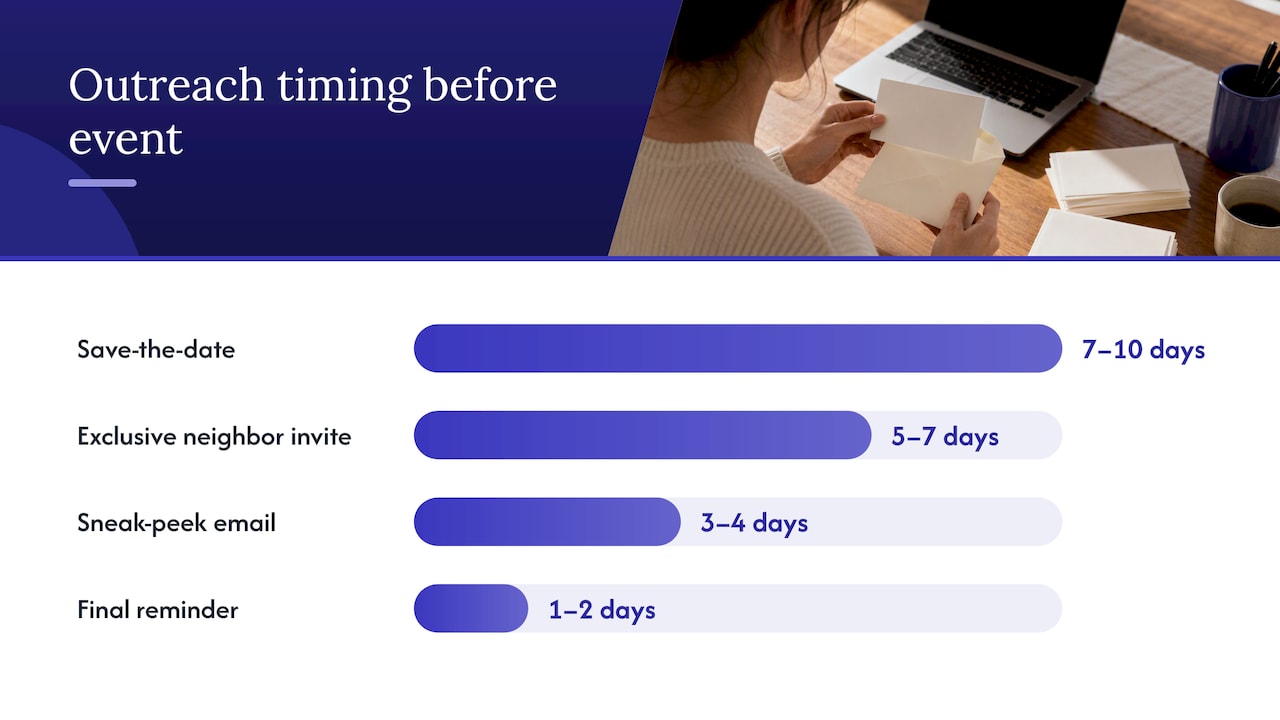
- Days 7–10: Send the save-the-date email and start scheduling directional signage placement, following the cadence Realtor for pre-event outreach.
- Days 2-3: Finish staging, complete small repairs, and do a final walkthrough for curb appeal.
- Day 1: Send the final reminder email and confirm staff, signage, and lockbox access.
- Day of: Send a morning-of message and do a last check of parking and traffic flow.
Lock in logistics early so they don’t eat into your last two days:
- Map a signage route from the nearest major intersection to the front door.
- Confirm parking so visitors aren’t blocking driveways or circling the block.
- Line up a buddy or co-host, since you should never run a showing alone.
- Test lockbox or smart-access codes the day before, not the morning of.
Pro Tip: Put your attendance and lead goals in writing before the first email goes out, so you know within an hour of the open house whether you need to adjust your follow-up plan.
High-return marketing channels and the exact outreach cadence
The channels that move the needle are the ones that reach people who are already circling the neighborhood, not a broad, unfiltered audience. An email sequence combined with signage and neighbor outreach outperforms any single tactic run alone, since realtor.com’s research on pre-event emails shows each channel reinforces the others rather than replacing them.
Run this cadence:
- 7-10 days out: Save-the-date email to your full database and past clients.
- 5–7 days out: Exclusive neighbor invite, framed as a preview before the public sees it.
- 3–4 days out: Sneak-peek email with photos or a short video walkthrough.
- 1-2 days out: Final reminder with time, address, and one reason to show up.
- Morning of: Short text or email nudge for anyone who opened but hasn’t confirmed.
Pair the email sequence with targeted social ads aimed at your local geography and the listing platform’s promoted placements, both of which reach people already searching that price band and area. Offline, plan on one directional sign at every turn a driver would need to make, plus a sign at the property itself, and door-knock the immediate streets two to three days before the event, since that’s when the invite still feels timely.
A well-run open house is measured, not guessed at. Track attendance, qualified leads, and appointments set, and test one variable at a time, like an email subject line, so you know what actually pulled people in.
Staging, curb appeal, photography, and buyer-ready takeaway materials
Staging exists to remove doubt. A buyer who can picture their own life in the space decides faster, and that’s the entire point of the walkthrough.
Work through this list before the first visitor arrives:
- Declutter every surface and depersonalize family photos and collections.
- Deep clean floors, windows, and bathrooms, since visitors notice grime before they notice square footage.
- Open blinds and turn on every light, including closets.
- Use a light, neutral scent rather than anything heavy or artificial.
- Fix the small stuff: loose handles, chipped paint, a squeaky door.
- Address curb appeal with fresh mulch, a swept walkway, and a clean front door.
Photos and video should go out with the sneak-peek email, three to four days before the event, so buyers arrive already emotionally invested. Capture the rooms that sell the lifestyle first: kitchen, primary bedroom, and any outdoor space.
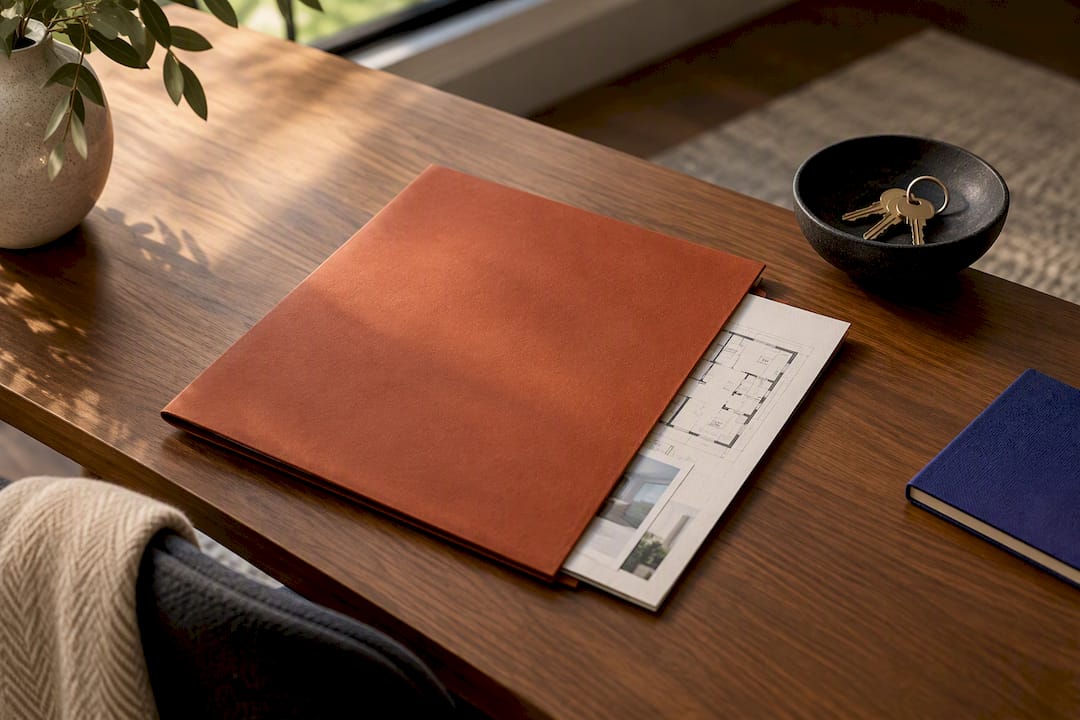
Leave a printed or digital takeaway packet on a table near the exit. Include a floor plan, a list of recent improvements with dates and costs, average utility bills, and nearby comparable sales, along with your contact information on every page.
Pro Tip: Match your staging choices to the buyer persona for that price band: a starter home benefits from bright, simple staging, while a move-up listing should show off entertaining space and storage.
Run-of-show for the event: greeting, sign-in, traffic flow, and conversion moves
A good open house has a rhythm. Visitors arrive, they feel welcomed without being cornered, and by the time they leave you have their information and a reason to follow up.
- Greet every visitor within the first ten seconds, introduce yourself, and point them toward the sign-in table before they start walking through.
- Offer both digital and paper sign-in, but lead with digital since it feeds directly into your CRM and starts your 24 to 48 hour follow-up clock.
- Let visitors move through the space on their own for the first few minutes, then check in with a light, specific question rather than a sales pitch.
- Before anyone leaves, ask a soft, direct question: would a fifteen-minute call this week help them compare this house to others they’re considering?
A few operational habits make the difference between a smooth event and a stressful one:
- Use a buddy system, since one agent should never be alone in a house with strangers, a safeguard NAR’s open house guidance recommends.
- Keep sensitive areas like home offices or safes closed off, and never hand out garage or door codes.
- Post a small, polite no-photography sign near any personal items you’d rather not see online.
- Do a full sweep of every room at the end of the event before locking up.
Pro Tip: Trade value before you ask for anything: mention one useful, specific insight, like a school boundary change or a nearby listing that just went pending, and watch how much more willing people are to sign in.
How to capture leads with low friction and scripts to use for greeting, qualifying, and neighbors
Digital sign-in tied to a CRM is what makes the 24 to 48 hour follow-up possible, since Constant Contact’s guidance on open house follow-up points out that removing friction at sign-in is what lets agents personalize outreach fast enough to matter. A tablet at the door with three fields, name, email, and phone, beats a paper sheet nobody wants to fill out honestly.
Keep a paper backup ready, and use privacy-first phrasing to ease hesitation:
- “We just need your name and a way to reach you, we never sell or share this list.”
- “This helps me send you the sold price once the house closes, if you’re curious.”
Use these scripts as starting points:
- Welcome: “Thanks for coming by, have you been looking in this neighborhood long?”
- Proximity question: “Do you live nearby, or are you looking to move into the area?”
- Qualifying: “Are you hoping to move in the next few months, and have you connected with a lender yet?”
- Neighbor invite: “I know you’re not looking to sell, but I’d love to keep you posted on what’s happening on your street.”
The people who sign in today are not leads. They’re people you haven’t trained yet on how the market actually works.
Before anyone walks out the door, ask if a short call this week would help them think through their options. That single question turns a sign-in sheet into a calendar full of appointments.
A prioritized follow-up sequence within 24-48 hours
The window right after an open house is the highest-leverage moment you’ll get with most of these visitors, and letting it slip past 48 hours costs you the advantage of being the freshest, most relevant contact they’ve had all week.
- Same day: Send a short, warm thank-you by text or email, no pitch, just a genuine note.
- Within 24-48 hours: Send a value-add message with market context, like recent comps or how many other groups toured the home.
- Follow with an appointment ask: Offer a specific time to talk through next steps rather than a vague “let me know if you have questions.”
- Long-term nurture: Add anyone who isn’t ready to a monthly market update sequence so you stay visible without pressure.
Match the channel to the moment: a call works best for anyone who seemed genuinely interested, a text suits a quick logistics question, and email is fine for the broader value-add message. Subject lines that reference the specific address or neighborhood, like “Update on the home you saw on Maple Street,” outperform generic blasts.
Nine in ten sellers rely on an agent to manage exactly this kind of follow-up, according to NAR’s 2025 Profile of Home Buyers and Sellers, which found 91% of sellers and 88% of buyers completed their transaction through an agent. That’s the case for staying consistent with follow-up instead of letting sign-in sheets go cold.
Track five numbers after every event: attendance rate, sign-in rate, appointments set, offers initiated, and cost per qualified lead. Those numbers tell you which marketing dollars and which scripts are actually working.
Legal and compliance considerations during open houses
Visitors do not need to sign a buyer representation agreement just to walk through an open house, and hosting one doesn’t automatically make you their agent, according to NAR’s consumer guide to open houses and written agreements. That distinction matters for how you script your greeting and your follow-up, since pressuring a visitor into paperwork at the door tends to backfire and erodes trust before you’ve earned it.
Check your state and local rules on required disclosures, since some markets require sellers to disclose known defects before or during a showing, and your brokerage likely has its own sign-in and disclosure procedures. Keep a copy of any required property disclosures available at the sign-in table, and make sure any lockbox or access codes follow your brokerage’s security policy. If a visitor asks direct questions about representation, be straightforward: you represent the seller unless a written agreement says otherwise, and that clarity protects both of you if the relationship moves toward an offer.
Contingency planning for low attendance or bad weather
Plan for a quiet open house the same way you plan for a busy one. If a storm rolls in or a competing local event pulls your crowd away, don’t cancel outright unless conditions are genuinely unsafe: a smaller, quieter open house still gives you one-on-one time with serious buyers and a chance to gather feedback for the seller.
Have a backup communication plan ready: a same-day email or text to your invite list letting them know the event is still on, or offering a private showing window instead. If attendance is thin, use the extra time to walk the house again with fresh eyes and note anything that might be holding back interest, from price positioning to a room that photographs poorly. A slow open house is also useful market feedback for the seller conversation you’ll need to have anyway.
Tips for hosting virtual or hybrid open houses to expand reach
A virtual or hybrid open house extends your reach to buyers who can’t make it in person, especially out-of-area buyers or anyone juggling a tight schedule. It works best as an addition to the in-person event, not a replacement, since Realtor.com’s reporting on open house strategy points out that live events create a sense of competition and urgency that a virtual tour alone can’t fully replicate.
Schedule a live video walkthrough during a quieter stretch of the in-person event, and have a second person handle the camera so you can keep greeting visitors at the door. Promote the virtual option in your sneak-peek and final reminder emails, and capture contact information the same way you would in person, through a simple registration link before the stream starts. Follow up with virtual attendees on the same 24 to 48 hour timeline as everyone else.
Apply “Training, Not Selling” to open houses
Most open house scripts are built to extract information, not to build trust, and buyers can feel that within the first thirty seconds. Flip it: treat the greeting as a small training moment, trading one genuinely useful insight, a comp, a school boundary update, a pending sale down the street, for their contact information instead of just asking for it.
Carry that same instinct into follow-up. Instead of “are you ready to make an offer,” try “here’s what similar homes have sold for this month, so you can see where this one fits.” And instead of chasing scattered leads, prioritize the neighbor-first hour and repeat open houses in the same streets. Familiarity builds trust faster than any script ever will.
— Middy
Turn open house training into a repeatable system
Knowing the scripts is one thing. Getting your whole team to actually use them, consistently, without reverting to pushy habits under pressure, is another. Middy Matthews built Trained, Not Sold., an interactive sales workshop, around exactly that gap, helping agents practice relationship-first scripts until they become the default instead of the exception.
For brokerage owners and team leads who want the same shift across a whole office, Coached, Not Bossed. offers a half-day training focused on coaching agents through better habits rather than managing them into compliance. Pricing details for these formats can be found on the provider’s website. If your team’s open house follow-up has been inconsistent, that’s usually a training gap, not a motivation problem, and it’s worth fixing before your next listing goes live.
FAQ
What is the 3-3-3 rule in real estate?
The 3-3-3 rule is a common shorthand some agents use to plan the first three days, three weeks, and three months of a listing, covering marketing pushes, price checks, and strategy adjustments. Definitions vary by brokerage, so treat it as a rough planning frame rather than a fixed formula.
Is selling your home to a cash buying company worth it?
Selling directly to a cash buying company usually trades a faster, more certain closing for a lower sale price than an open-market listing. Whether it’s worth it depends on how much speed and certainty matter to the seller compared to maximizing proceeds, which is a conversation best had with a local agent who knows the current market.
How much does a realtor make off of a $300,000 house?
Realtor commissions are negotiable and vary by market and brokerage, so there’s no fixed national rate to apply in any specific case. A seller should ask their agent directly what commission structure applies to their specific listing agreement.
What are some tips for a successful open house?
Focus on the three things that drive results: targeted pre-event marketing with a set email cadence, staging that removes doubt for buyers, and a frictionless sign-in process followed by CRM-driven contact within 24 to 48 hours, a window Constant Contact’s follow-up research identifies as critical for converting visitors into clients. Pair that with a clear safety plan and a genuine, value-first greeting instead of a sales pitch at the door.
Leave a Reply