
A coachable mindset is your willingness and ability to seek out feedback, actually hear it, and change your behavior because of it. It matters because coachable people improve faster, in sports, sales, and leadership alike, while everyone else stays stuck defending what they already do. Start tonight: after your next meeting or practice, ask one person, “What’s the one thing I should do differently next time?” Then write down what they say.
TL;DR:
- Consistently seeking, listening to, and applying feedback improves coachability across sports, sales, and leadership, and can be developed with deliberate practice.
- Coachability is made up of six measurable components: attentiveness, willingness to learn, persistence, feedback seeking, receptivity, and implementation, which can be trained over time.
- Small, structured interventions like daily reflection, specific feedback requests, and weekly behavior changes can significantly boost coachability within eight weeks.
- Tracking feedback frequency, implementation rates, and peer ratings over 30 to 90 days offers concrete evidence of progress beyond subjective feelings.
- Choosing between coaching, mentoring, or self-directed practice depends on the specific goal, with structured coaching best for behavioral, goal-oriented skill improvements.
Table of Contents
- What Is a Coachable Mindset, Exactly?
- Why Coachability Matters More Than Talent
- Coachable vs. Uncoachable: What It Looks Like in the Room
- An 8-Week Plan to Build a Coachable Mindset
- How to Track Whether It’s Actually Working
- Coach, Mentor, or Self-Directed Practice: Which Do You Need?
- Three Snapshots: Athlete, Sales Pro, New Manager
- Athletic Discipline Meets Leadership Coaching
- Build This Into Your Team, Not Just Yourself
- Sources
What Is a Coachable Mindset, Exactly?
Forget the vague idea that coachability just means “being nice to hear criticism.” Researchers who study this have broken it into six specific, measurable pieces, and a systematic review in Sports Medicine validates them across sport, business, and education. A 2025 literature synthesis backs the same six components, which tells you this isn’t one researcher’s pet theory. It’s a consensus.
Here’s the breakdown, with what each one looks like in practice:
- Attentiveness. You notice what a coach, boss, or teammate is actually saying, not what you assume they’re saying.
- Willingness to learn. You treat a skill gap as a project, not an insult.
- Persistence. You keep applying feedback after the first attempt fails.
- Feedback seeking. You ask for input before someone has to offer it.
- Feedback receptivity. You can hear hard feedback without shutting down or arguing back.
- Feedback implementation. You change something concrete, not just nod and move on.
None of this is fixed at birth. You can build every one of these six muscles on purpose, and that’s the whole premise of the plan ahead.
Why Coachability Matters More Than Talent
Talent gets you noticed. Coachability determines whether you keep improving after people are already watching you. That gap explains why some talented salespeople plateau at year three while less naturally gifted colleagues keep climbing.
The strongest evidence comes from growth-mindset research, which shows that how you interpret ability shapes how you respond to criticism. Field studies on brief mindset interventions found an average 0.10 GPA gain for lower-achieving students after short, targeted training. That’s not a massive number on its own, but it came from interventions lasting a single class period or two, which suggests coachability and mindset are far more responsive to deliberate practice than most people assume.
The takeaway: A short, structured intervention moved real academic outcomes. If a 20 minute exercise can shift GPA, a deliberate 8 week habit can shift how you take feedback at work or on the field.
Workplace and athletic performance both track the same pattern: people who actively seek correction outperform people who wait to be told.
Coachable vs. Uncoachable: What It Looks Like in the Room
You can usually tell within one conversation whether someone is coachable. Watch for these signals, because they show up long before performance numbers do.
Coachable behavior looks like this:
- Listening for the specific behavior being flagged, not the general tone of the comment
- Testing new feedback within a day or two, rather than filing it away
- Asking a follow-up question instead of explaining why the feedback is wrong
Uncoachable patterns look like this:
- Getting defensive or explaining away every piece of criticism
- Blaming circumstances, other people, or bad luck
- Nodding along in the meeting, then changing nothing afterward
That last one is sneaky. Passive listening gets mistaken for coachability all the time, but genuine coachability requires visible behavior change tracked over weeks, not a polite face in the room.
Pro Tip: When you feel defensiveness rising, treat it as data, not a verdict. Ask yourself, “What would make this true?” instead of “How do I prove this wrong?” That single question turns a threat response into curiosity, which is exactly the shift Carol Dweck’s growth mindset research points to as the fix for defensive reactions.

An 8-Week Plan to Build a Coachable Mindset
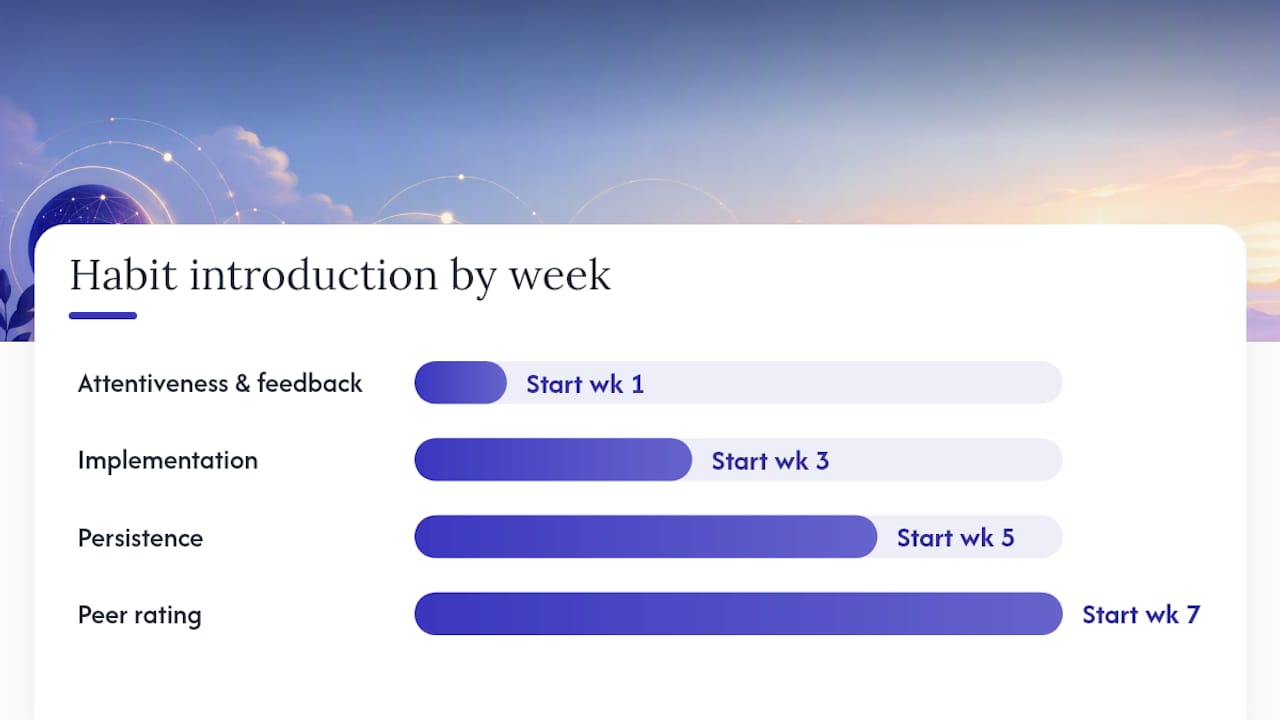
Coachability isn’t a personality trait you either have or don’t. It’s a set of habits, and habits respond to structure. Here’s an 8 week plan built around daily micro practices and weekly checkpoints.
Daily micro practices (5 to 10 minutes):
- Listening drill. In one conversation a day, repeat back what the other person said before responding. No exceptions.
- Reflection prompt. End each day by writing one sentence answering: “What feedback did I get today, and what did I do with it?”
- Feedback script. Use one consistent question to request input: “What’s one thing I could have done better in that?” Ask it after meetings, practices, or client calls.
Weekly sprints:
- Weeks 1 to 2: Focus only on attentiveness and feedback seeking. Ask your daily script question at least five times each week.
- Weeks 3 to 4: Add implementation. Pick one piece of feedback and change one specific behavior within 48 hours of receiving it.
- Weeks 5 to 6: Add persistence. Track whether the changed behavior sticks under pressure, not just in low stakes moments.
- Weeks 7 to 8: Ask someone who knows your work well to rate your coachability on a 1 to 10 scale, then compare it to your own rating.
Checkpoints:
- 30 days: Count how many times you actively sought feedback versus waited to receive it unprompted.
- 60 days: Measure how many of those feedback items you actually implemented within 48 hours.
- 90 days: Ask two people who work with you regularly whether they’ve noticed a change. Their answer matters more than yours.
This mirrors the format behind a medical-school coachability curriculum that used modular training spread across two years and still produced self-reported improvement in students’ coachability skills. Short, repeated touchpoints beat a single long workshop every time.
How to Track Whether It’s Actually Working
Feeling more open to feedback isn’t the same as being more coachable. You need numbers, even rough ones, because active implementation tracking beats relying on how good the conversation felt.
Three metrics do most of the work:
- Feedback frequency: how many times per week you actively requested input.
- Implementation rate: what percentage of feedback you acted on within 48 hours.
- Peer rating: a simple 1 to 10 score from someone who watches you regularly.
Run a 30 to 90 day test on exactly one behavior. Pick something specific, like interrupting less in meetings or following up faster with clients. Record your baseline this week, apply feedback for the test period, then measure the outcome against that baseline.
Copy that structure into a notebook or spreadsheet and fill it in weekly. The gaps in your own numbers will tell you more than any personality quiz.
Coach, Mentor, or Self-Directed Practice: Which Do You Need?
These three routes solve different problems, and picking the wrong one wastes months. Practitioners generally agree that coaching targets structured performance change, while mentoring offers lived experience and broader career perspective. Self-directed practice works when the skill gap is narrow and you already know what “better” looks like.
Use these three rules to decide:
- If your goal is specific and behavioral (stop talking over clients, close faster), choose a coach.
- If you need perspective on a bigger, fuzzier career question (should I move into management?), choose a mentor.
- If resources are tight and the gap is small, self-directed practice with a tracking sheet can carry you most of the way.
Many failed development relationships come down to mismatched expectations: someone wanted a mentor’s perspective but hired a coach’s structure, or the reverse. Name what you actually need before you book anyone.
Three Snapshots: Athlete, Sales Pro, New Manager
A competitive swimmer kept losing the final ten meters of every race. Her coach flagged a breathing pattern issue she’d never noticed. She implemented the fix within a week and shaved half a second off her personal best by the next meet.

A sales rep kept losing deals at the proposal stage. Instead of assuming price was the problem, he asked three lost prospects a direct question: “What made you choose someone else?” Two mentioned unclear pricing structure. He rewrote his proposal template within days and closed the next two deals.
A newly promoted manager kept getting quiet, unenthusiastic team meetings. She asked her team directly what was missing. The answer: she was talking too much and not asking questions. She cut her talking time in half over the next month and meeting engagement visibly picked up.
In each case, track the same thing: what specific behavior changed, and what result followed within weeks, not months.
Athletic Discipline Meets Leadership Coaching
Competitive sports taught a lesson that translates directly to boardrooms: the athlete who improves fastest isn’t the most talented one, it’s the one who asks “what did I miss?” after every single performance, win or lose. That habit, repeated for decades, is what separates people who plateau from people who keep climbing.
Workshop participants consistently report the same shift after practicing structured feedback routines: the anxiety around receiving criticism drops once they have a specific script to use, rather than winging it in the moment. Sustainable behavior change comes from repeatable habits, not a single motivational push that fades by Friday.
— Middy
Build This Into Your Team, Not Just Yourself
A coachable mindset spreads fastest when a whole team practices it together, not when one person tries to will it into existence alone. Workshops give real estate brokerages, corporate teams, and young leaders a shared feedback language, so “coachable” stops being a vague compliment and becomes a set of habits everyone actually uses.

Formats range from a single keynote that resets how a room thinks about feedback, to a half-day workshop that builds the daily habits covered above, to a full training series for teams that want the 8 week plan run live with a facilitator, as shown in real examples on case studies | real results from TBE Agency clients. Real estate teams use it to speed up onboarding. Corporate groups use it to fix the exact defensiveness patterns that stall promotions. Organizers booking a conference or leadership event typically walk away with a team that asks for feedback instead of dreading it.
If you’re planning an event or building out a training calendar, start with sales training built around habits that stick or reach out directly to talk through which format fits your group.
Sources
The Sports Medicine systematic review established the six subcomponent framework used throughout this piece. The medical-school curriculum study shows a tested, short-format training model. Stanford’s growth mindset resource explains the psychology behind feedback defensiveness, and the coach-versus-mentor guidance clarifies which support route fits which goal.
- Systematic review on coachability — Sports Medicine (PMC12476389)
- Synthesis of coachability research (SpringerLink, 2025)
- Growth mindset (Stanford CTL)
Leave a Reply